
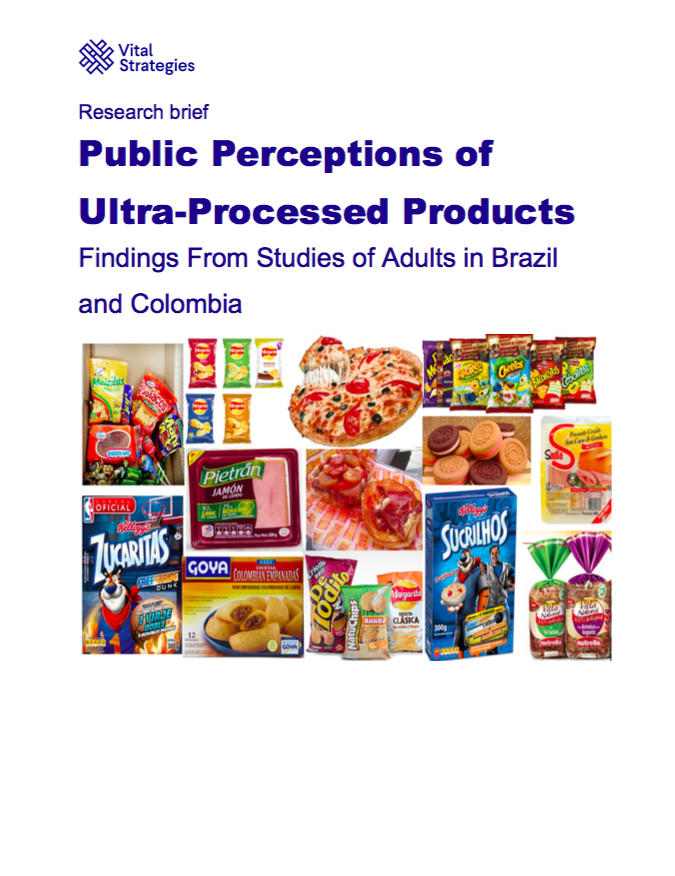
Findings From Studies of Adults in Brazil and Colombia
In recent years, global attention on ultra-processed foods has grown as a result of the increasing and firm evidence linking such foods with chronic disease. There is now recognition that public policies must specifically focus on ultra-processed foods as a means of reducing the public health burden. Currently there are public health policy approaches – front-of-package warning labels, taxes on sugary drinks and restrictions on marketing of junk food – that can result in reduced consumption of ultra-processed foods and beverages.
Public support is crucial for such policies to pass. Yet there is limited available data measuring the public’s understanding of ultra-processed products.
As part of the Bloomberg Philanthropies Food Policy Program, Vital Strategies supported studies that were conducted in Brazil and Colombia in 2017 and 2018, which included several questions on public perceptions of ultra-processed foods and products. The findings represent the views of the public in countries that are arguably at the forefront of public policy efforts related to ultra-processed products. As such, they provide instructive insights on the importance of communicating with the public to build policy consensus on regulating ultra-processed products.
This research brief summarizes key findings from the available data. These findings offer a baseline against which outcomes of future communication on the negative effects of ultra-processed products can be compared.