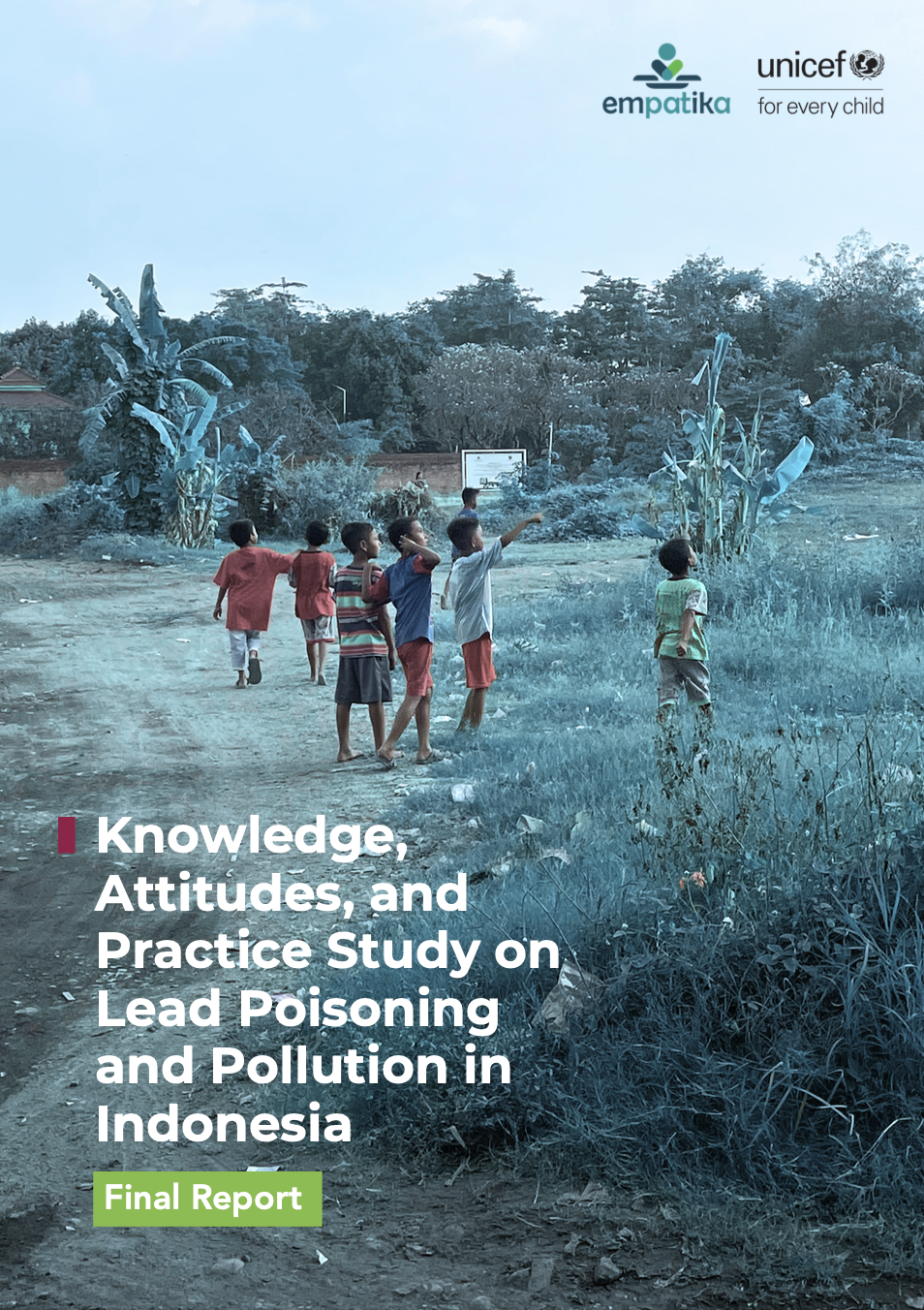
Though lead exposure poses many health risks to humans, many people are unaware of lead in their environment and the risks of exposure. In Indonesia, little is known about people’s awareness of lead exposure and their prevention measures.
This report presents the findings of a mixed methods study to explore people’s knowledge, attitudes, and practices (KAP) about lead exposure in two communities with a history of lead contamination. The report indicated a lack of knowledge of lead, its health impacts, and its key sources. The study also revealed important misconceptions about lead and environmental pollution and provided recommendations for the planning of effective communication campaigns in these communities.
Vital Strategies played a key role in study design, data interpretation, dissemination, and research firm selection. We’ve also utilized the results of the KAP study to develop a communications campaign in the target communities. This work was made possible through funding by UNICEF Indonesia.
Recent Abstracts
Analysing India’s Unique Subnational WHO FCTC Article 5.3 Policies and Their Implementation Across 17…
Strengthening the Tobacco Cessation Ecosystem
Activity Report 2025 – Brazil
More Data Better Health – Brazilian People’s Perceptions of Risk Factors for Cancer
Relatório de Atividades 2025 – Brasil
Mais Dados Mais Saúde – Percepções da população brasileira sobre fatores de risco…
What Primary Care Records Reveal About Cancer Signs and Symptoms
O que os prontuários da atenção primária revelam sobre sinais e sintomas de…
CRVS Performance Measurement and Monitoring Resource Kit
Model Kentucky Ordinance Establishing a County Opioid Abatement Advisory Council