
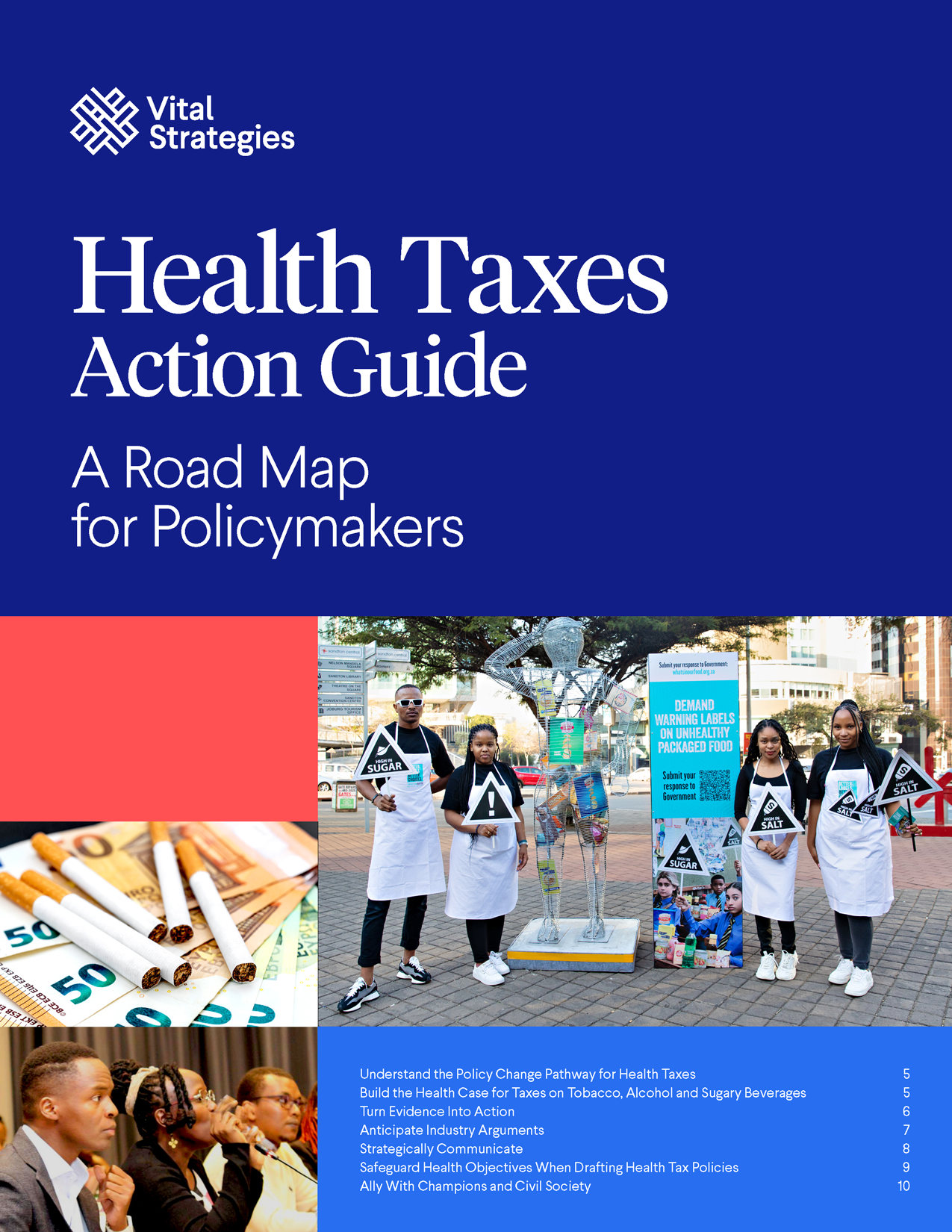
Noncommunicable diseases such as cancer, heart disease, and diabetes are among the leading causes of death worldwide, often driven by the consumption of tobacco, alcohol, and sugary drinks. Governments have a proven tool to address these risks: health taxes. By raising prices on harmful products, well-designed excise taxes reduce consumption, save lives, and generate reliable revenue for health and social programs.
The Health Taxes Action Guide offers policymakers and advocates a clear road map for advancing these measures. Drawing on global evidence and real-world examples, the guide outlines how to build the health and economic case for reform, anticipate and counter industry interference, design strong and equitable tax structures, and mobilize champions across government and civil society. It emphasizes practical steps that keep health objectives at the center while also strengthening fiscal resilience.
This resource is intended for ministries of health, finance officials, legislators, and civil society partners who are working to reduce the toll of harmful products and expand public health gains. Whether countries are introducing health taxes for the first time or strengthening existing policies, the guide provides actionable strategies to translate evidence into lasting impact.