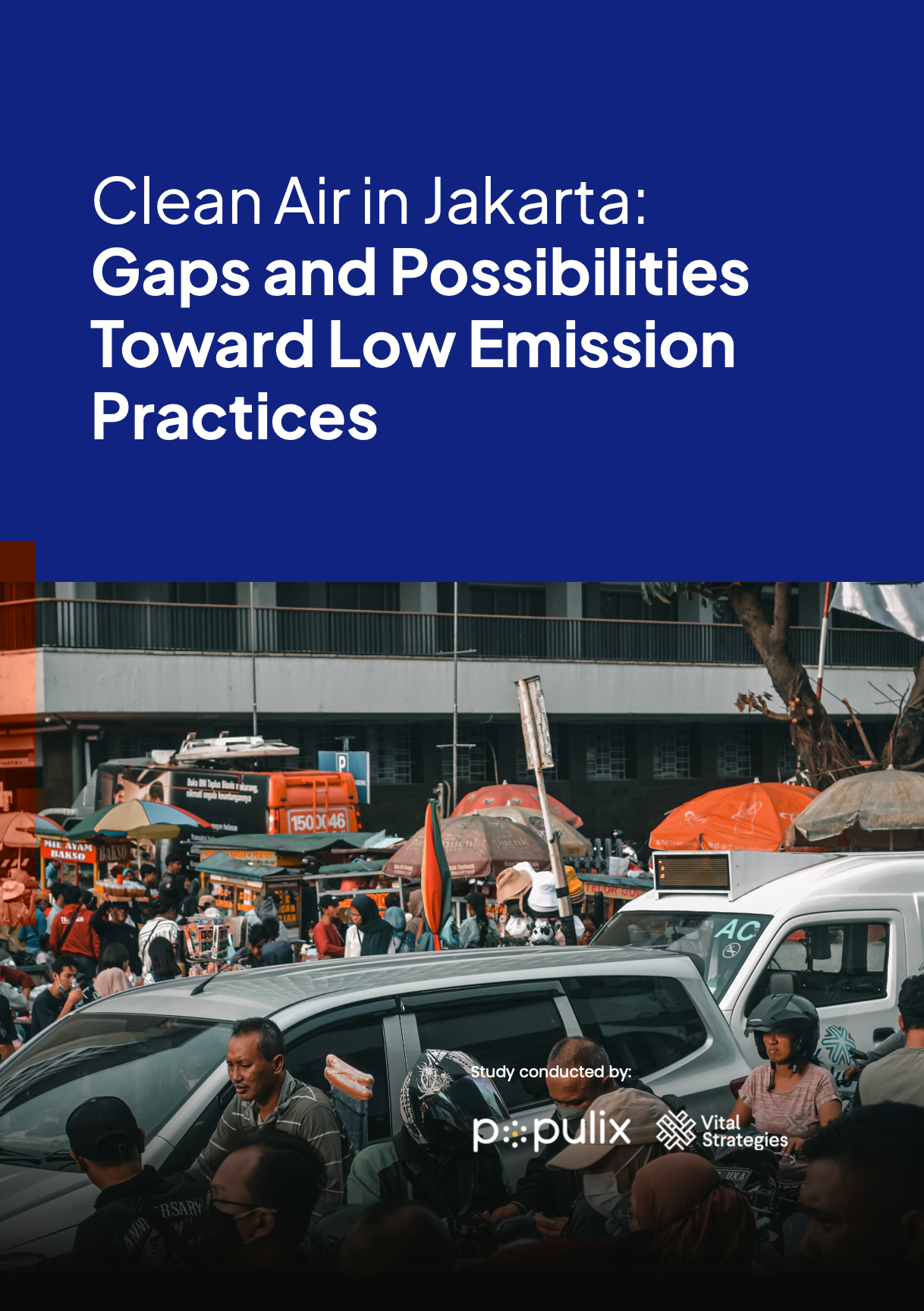
Jakarta’s effort to improve air quality through the implementation of Low Emission Zones (Kawasan Rendah Emisi/KRE) marks a crucial step toward a healthier, more equitable, and sustainable city. Under the Breathe Cities initiative, Populix and Vital Strategies conducted two phases of research to identify gaps and explore possibilities in community practices, challenges, and opportunities that support low emission transitions.
A city-wide perception survey of 800 respondents across Jakarta in 2024, followed by an in-depth study in ten urban villages in 2025, found that while Jakarta residents express deep concern about air pollution and broad support for clean air policies, they still face structural barriers such as limited access to public transport, waste management, and green spaces.
These findings underscore that achieving low emission practices in Jakarta relies not only on policy but also on active community participation and effective local communication. To ensure that the benefits of clean air reach everyone, air quality regulations such as KRE implementation must consider social and infrastructural inequalities while empowering local communities as key agents of change toward a cleaner and more inclusive Jakarta.
Recent Abstracts
Birth and Death Registration as the Anchor for Digital Public Infrastructure and Access to…
Analysing India’s Unique Subnational WHO FCTC Article 5.3 Policies and Their Implementation Across 17…
Strengthening the Tobacco Cessation Ecosystem
Activity Report 2025 – Brazil
More Data Better Health – Brazilian People’s Perceptions of Risk Factors for Cancer
Relatório de Atividades 2025 – Brasil
Mais Dados Mais Saúde – Percepções da população brasileira sobre fatores de risco…
What Primary Care Records Reveal About Cancer Signs and Symptoms
O que os prontuários da atenção primária revelam sobre sinais e sintomas de…
CRVS Performance Measurement and Monitoring Resource Kit