
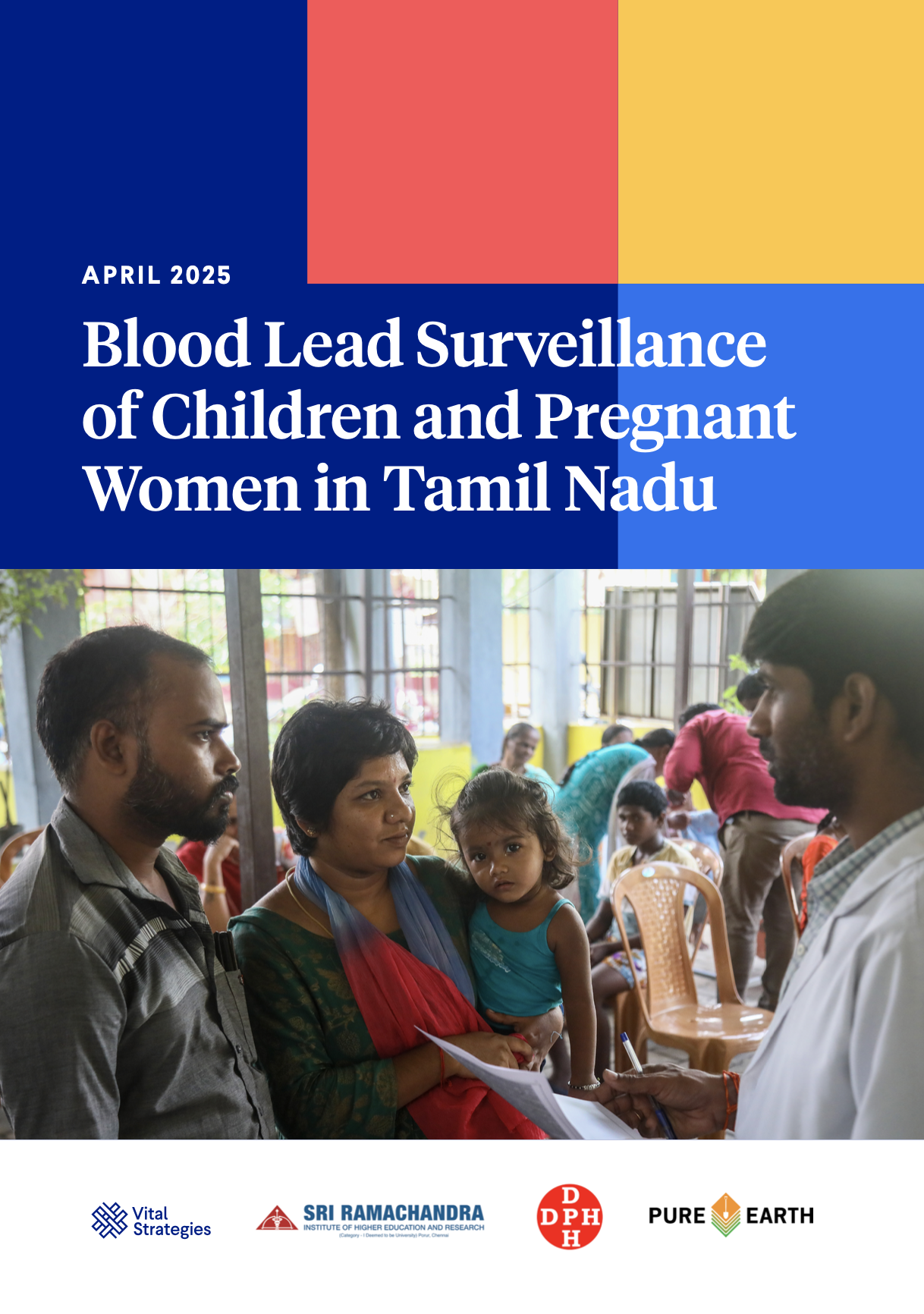
New data sheds light on lead exposure among children and pregnant women in Tamil Nadu, India
Lead exposure remains a major public health problem in India, especially for young children. Vital Strategies, Pure Earth, and Sri Ramachandra Institute of Higher Education and Research- a WHO Collaborating Centre, in partnership with the Directorate of Public Health and Preventive Medicine, Government of Tamil Nadu, conducted a first statewide blood lead surveillance for children and pregnant women.
Our findings reveal that 39 percent of children aged below 6 years in Tamil Nadu have blood lead levels (BLLs) above 5 µg/dL, with children living in urban areas and aged between 5 and 6 years at greater risk of elevated BLLs. The study highlights multiple risk factors, such as staying in a household with recent renovation or chipping paint, living near a lead-related industry, and the type of flooring. proximity to lead-related industries, and the type of flooring are associated with high BLLs in children.
This report highlights the importance of establishing a routine blood lead surveillance system and monitoring of risk factors for elevated BLLs among young children.