
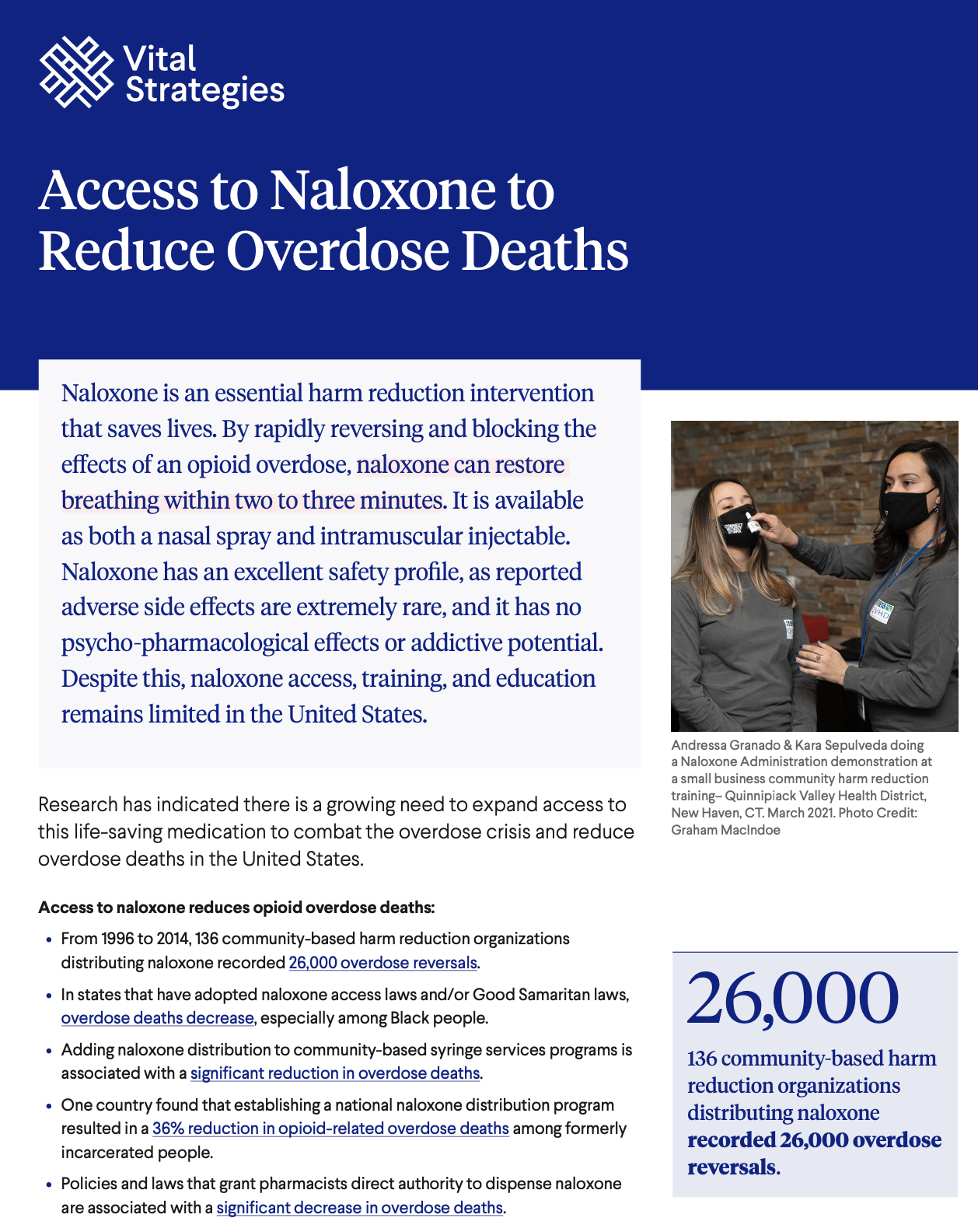
Access to naloxone has been found to decrease overdoses by more than 10 percent. Naloxone works by rapidly reversing the effects of an opioid overdose, including respiratory depression. By carrying naloxone and learning how to administer it, you’re taking action to prevent overdose.
This is one of five facts sheets explaining 5 interventions needed to end the overdoses crisis.
Other fact sheets include:
Recent Abstracts
Catalyzing Support for CRVS Improvement – Examples from the Data for Health Initiative
A Guide to Designing Contextualized Civil Registration and Vital Statistics E-Learning Courses
Guide to Developing Standard Operating Procedures (SOPs) for Civil Registration Using a Case-Based…
Building Safe and Healthy Communities
Uncovering the Hidden Risks of PM 2.5 Exposure Among School-Aged Children in Jakarta
Foundations & Futures: Reimagining Public Health in the Artificial Intelligence Era
Strengthening Health Systems to Address Air Pollution in Ethiopia
Policy Brief: Childhood Blood Lead Surveillance in Indonesia – Findings and Policy Recommendations
Impact of Blue Lanes on Road Safety: Crashes, Speed and Motorcyclists’ Perceptions in…
Impacto da Faixa Azul na Segurança Viária: Sinistros, velocidade e percepções de motociclistas…