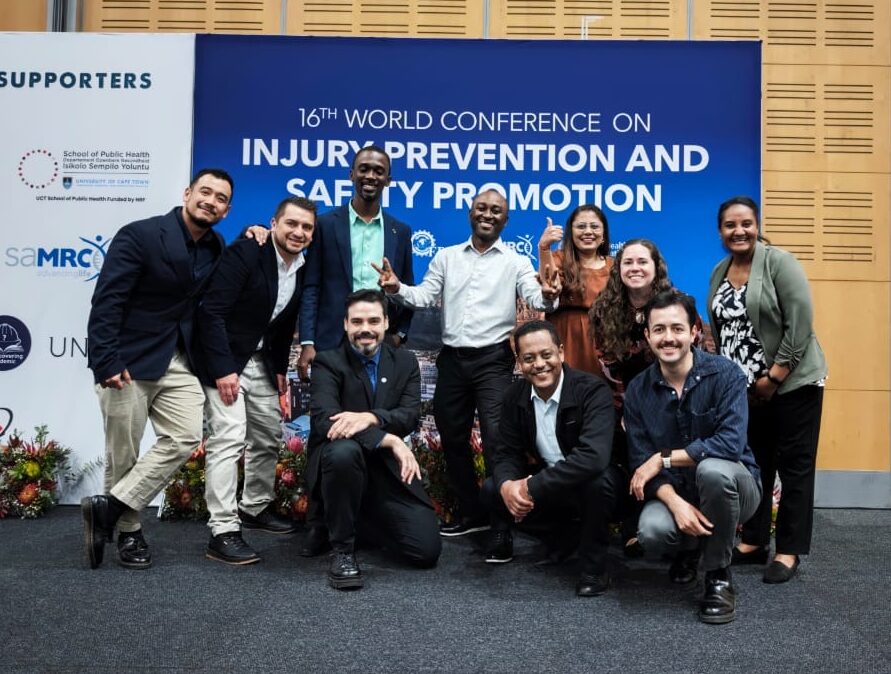
Three Vital Strategies-supported road safety campaigns were honored with International Safety Media Awards at the Safety 2026 conference in Cape Town, South Africa in September, with honors going to governments in Córdoba, Argentina and Karnataka and Delhi, India that are partners in the Bloomberg Philanthropies Initiative for Global Road Safety.
The conference week also featured a dozen presentations by Vital Strategies staff and government partners, and a kickoff meeting for the city of Cape Town, which is joining the Initiative and bringing the consortium to 14 countries and more than 30 cities around the world. Supported by Vital Strategies and other global partners, these cities and countries carry out best-practice road safety interventions ranging from infrastructure improvements to data surveillance to media campaigns—showing the value of treating road safety as a public health issue with effective, proven solutions. Since 2007, BIGRS interventions have saved nearly 1 million lives on the world’s roads.
“Having such a presence at Safety 2026, including a variety of data-driven abstracts accepted for presentation and government partners receiving awards, is an incredible honor and a meaningful recognition of the rigor behind our work,” said Sylviane Ratte, Director, Road Safety Program at Vital Strategies.

More than 90% of the 1.19 million deaths and as many as 50 million injuries resulting from road crashes each year occur in low- and middle-income countries, and the vast majority of them are preventable. By analyzing road crashes, it’s possible to identify who is most at risk, where risks are concentrated and what is causing them—leading to more effective policies and interventions, including data-driven communication campaigns.
“Motorcycle Reconstruction,” a campaign launched in November 2024 by the Karnataka State Road Safety Authority, earned a bronze award. Focused on reducing driving speeds among motorcyclists, the campaign featured a road safety expert highlighting how even small differences in speed can affect crash risk, severity and survival. “Slow down. 10km/h makes the difference between life and death,” a campaign launched in September 2025 in Cordoba, Argentina, also focused on reducing speeding among motorcycle drivers by showing the link between speed and braking distance. And the “Helmet: Consequences” campaign, launched in August 2025 in Delhi, India, focused on persuading motorcycle riders to wear and properly fasten their helmets.
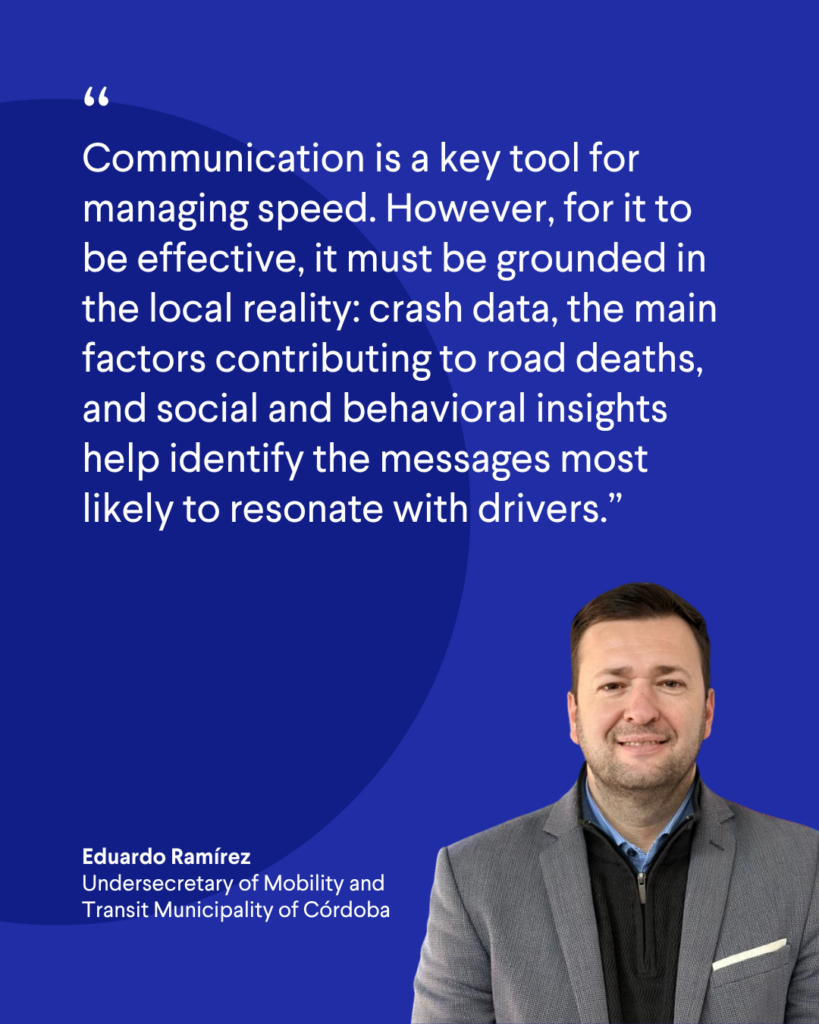
“Communication is a key tool for managing speed. However, for it to be effective, it must be grounded in the local reality: crash data, the main factors contributing to road deaths, and social and behavioral insights help identify the messages most likely to resonate with drivers,” said Eduardo Ramírez, Undersecretary of Mobility and Transit for the Municipality of Córdoba. “This international recognition of our campaign, developed with technical support from Vital Strategies through the Bloomberg Philanthropies Initiative for Global Road Safety, is a significant encouragement to continue advancing evidence-based road safety policies and actions.”
Behind interventions such as these campaigns lies a critical piece of road safety work: surveillance. Reliable data on crash deaths and injuries lets governments know where to act, who is most at risk and whether interventions are working. Vital Strategies’ surveillance team supports governments in strengthening every link of that data chain: collecting better information from police, hospital and other sources; integrating data across those sources to close reporting gaps; analyzing data to reveal patterns and risk factors; and helping decision-makers use findings to shape policy.
Vital Strategies’ presentations at Safety 2026 highlighted examples of this work, including the use of AI to process data faster and across previously disconnected sources in four BIGRS cities: Recife, Brazil; Buenos Aires, Argentina; Mexico City, Mexico; and Kuala Lumpur, Malaysia.
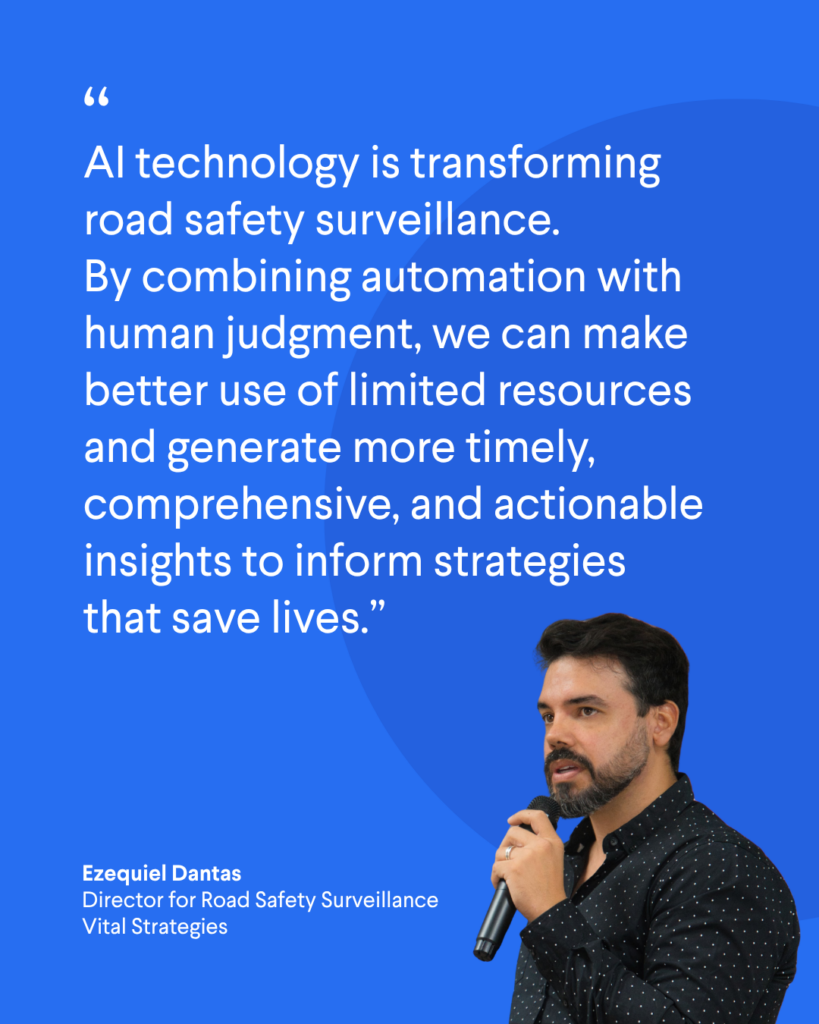
“AI technology is transforming road safety surveillance by reducing the time teams spend on repetitive, time-intensive tasks, such as manual data entry, and allowing us to redirect human expertise toward higher-value activities,” said Ezequiel Dantas, Director for Road Safety Surveillance at Vital Strategies. “This includes strengthening data quality, conducting more in-depth analyses, and identifying patterns that can help us better understand where, why, and how crashes occur. By combining automation with human judgment, we can make better use of limited resources and generate more timely, comprehensive, and actionable insights to inform strategies that save lives.”
Two other studies, from Delhi, India, and Chattogram, Bangladesh, focused on the impact that linked data systems can have on increased cases captured in crash-reporting systems. Vital Strategies also presented on a study conducted with Johns Hopkins University across five African cities, highlighting the importance that pairing data with speed limit changes, enforcement or engineering interventions can have on declines in road deaths.
Other presentations featured:
- An evaluation of dedicated motorcycle lanes in São Paulo, Brazil
- Results from an evaluation of a campaign to reduce speeding in Ethiopia
- A study of motorcycle knowledge of and attitudes toward driving risk and safety in Kenya, presented by Dr. Gladys Nyachieo of Multimedia University of Kenya, a Vital in-country partner
- A record-linkage methodology to improve completeness of fatality data in Cali, Colombia
- An evaluation of the award-winning Karnataka multimedia campaign, presented by Dr. Gautham Melur Sukumar of the National Institute of Mental Health & Neuro Sciences, a Vital Strategies in-country partner, using data triangulated across different sources—showing that self-reported speeding declined by nearly four percentage points, and roadside observations saw a large decline in mean speeds.