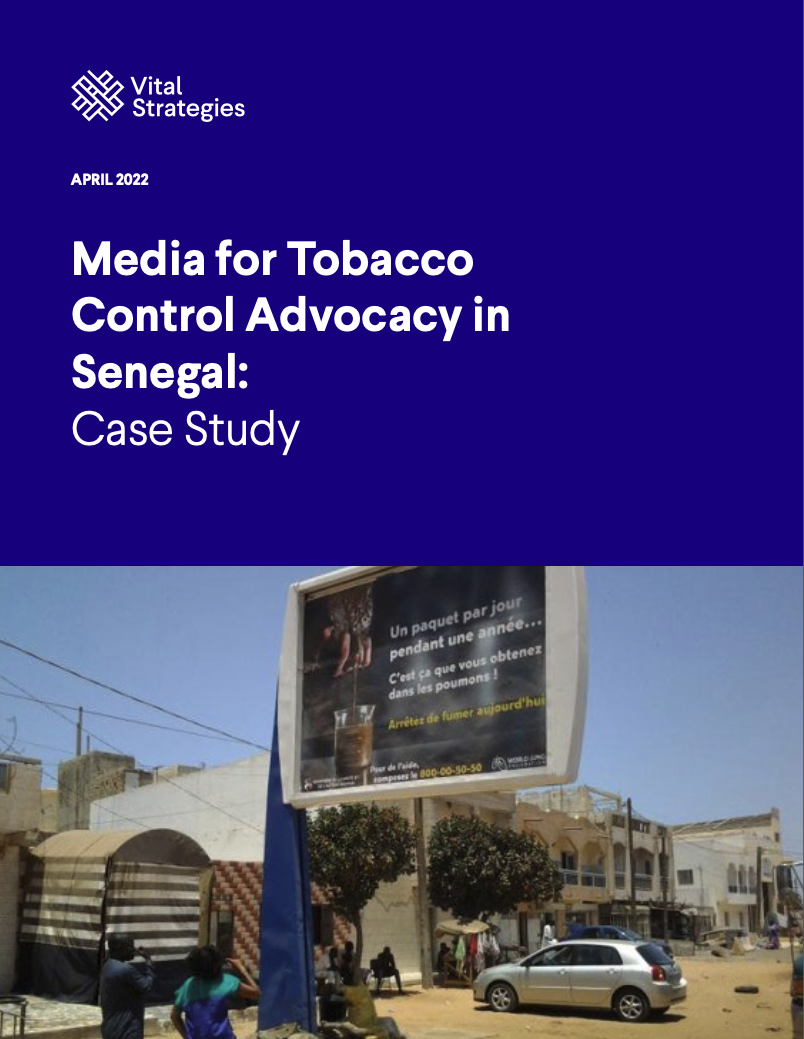
In the early 2000s, Senegal faced growing rates of tobacco use and related noncommunicable diseases. However, tobacco industry interference challenged the passage and implementation of comprehensive tobacco control policy in the country. Despite such challenges, in 2014 Senegal adopted a new comprehensive tobacco control law, which at the time was the strongest in the region. But how did advocates, public health leaders and policymakers achieve passage of such legislation? Recently, Vital Strategies released a case study and evaluation paper to explore that question.
The publications look at how widespread social and traditional media campaigns, which were launched in Senegal in 2013, built momentum and public support for advancing tobacco control and catalyzed government action on a bill that had been languishing in Parliament for years.
Download: Media for Tobacco Control Advocacy in Senegal: Case Study
Recent Abstracts
Strengthening Health Systems to Address Air Pollution in Ethiopia
Policy Brief: Childhood Blood Lead Surveillance in Indonesia – Findings and Policy Recommendations
Impact of Blue Lanes on Road Safety: Crashes, Speed and Motorcyclists’ Perceptions in…
Impacto da Faixa Azul na Segurança Viária: Sinistros, velocidade e percepções de motociclistas…
Culture is Medicine- a Model of Indigenous Harm Reduction in Practice
Trouble Brewing – The Case for Alcohol Policy (Second Edition)
Lessons from Vietnam’s Campaign for a Tax on Sugar-Sweetened Beverages
Principles of Alcohol Taxation
Clean Air in Jakarta: Gaps and Possibilities Toward Low Emission Practices
Public Attitudes Towards Alcohol Policy: South Africa