
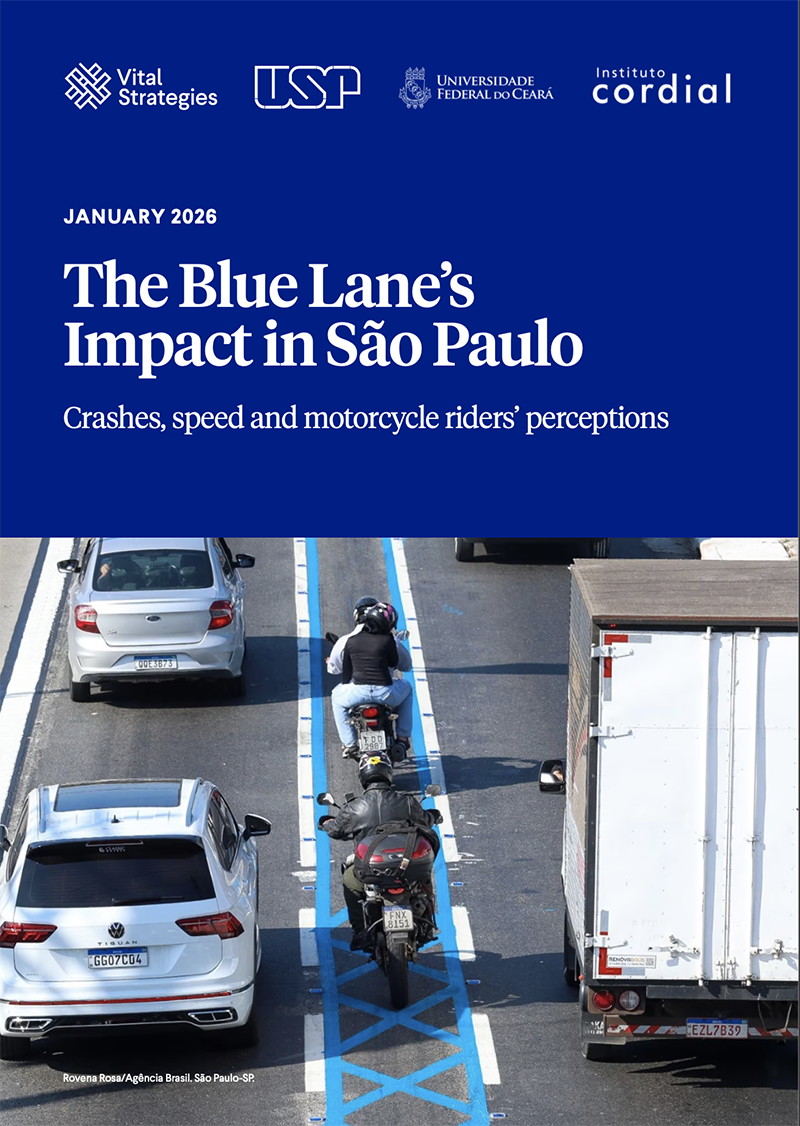
Road crashes are among the leading causes of deaths and injuries worldwide, causing an estimated 1.19 million deaths each year according to the World Health Organization. Youth aged 5-29 years are most affected. Latin America and Brazil are no exception and have seen a sharp increase in motorcyclist crashes over the past few years. Seeking solutions to this burden, the city of São Paulo, Brazil, piloted a project in 2022 called “Blue Lane” (Faixa Azul, in Portuguese) – road markings that define a dedicated lane for motorcyclists between other vehicle traffic.
Despite the rapid expansion of Blue Lanes in São Paulo, a gap in evidence measuring their real effects on road safety remained. To fill this gap, the study “Impact of the Blue Lane on Road Safety: Road crashes, speed, and motorcyclists’ perceptions in São Paulo” was designed with robust methods of impact evaluation, combining quantitative and qualitative approaches. The findings indicate caution is needed when considering expansion of the Blue Lanes, as fatal collisions involving motorcyclists at intersections could double on Blue Lane roadways. This study offers solid scientific evidence on the effects of Blue Lanes and support for future public policy decisions.
This resource is intended for government officials, researchers, legislators, and civil society partners who are working to reduce the toll road deaths and injuries across the globe.