

Every year, more than a million people around the world lose their lives on the road—a staggering toll that ripples through families, communities, health care systems and entire countries. Each year on the third Sunday of November, the World Day of Remembrance for Road Traffic Victims inspires countries to pause to acknowledge these losses. The day is shaped by collective mourning but is also imbued with action—serving as a reminder that each life lost is a life that could have been protected, and that the responsibility to prevent these tragedies continues long after the ceremonies end.
This year’s global theme, “Lost Talents,” focuses on the potential that is lost with each road crash death. Vital Strategies marks this occasion each year by supporting commemorative activities including mass media campaigns, public murals, reflections from crash survivors, and candlelight ceremonies. All serve a shared purpose: to bring visibility to the human and societal costs of road crashes and catalyze actions to prevent these tragedies. Through these observances, Vital and partners reinforce a central truth: Road deaths are not an unavoidable part of modern life. They are preventable public health issues, and prevention requires thoughtful, sustained efforts.
That commitment is reflected in Vital Strategies’ focus on evidence-based, proven interventions. As a key partner in the Bloomberg Philanthropies Initiative for Global Road Safety (BIGRS) for more than a decade, Vital works with cities and governments to strengthen data systems, develop strategic communication, improve road-user behavior, and align agencies so that enforcement, communication and policy can work together rather than in isolation. These coordinated efforts build the foundation for safer streets, and communities where the loss of life on the roads is not accepted as inevitable.
In 2025, governments around the world held remembrance events supported by Vital Strategies. Here are some highlights:
Argentina (Buenos Aires and Córdoba)
In Buenos Aires, the city lit major landmarks in yellow, a vivid symbol casting light on the message that no traffic death is acceptable. Electronic signs across the city echoed this theme, offering constant reminders of the collective effort needed to protect lives. Government leaders publicly renewed their commitment to Vision Zero, emphasizing the ongoing work required to ensure safer mobility for everyone.
Córdoba marked the occasion with a full awareness week built around the theme of a “lost future.” The week included social media engagement, promotional outreach and the release of a new driver’s license study guide. A testimonial video featuring a family who lost an 18-year-old daughter, Agostina Pace, to a car crash underlined the devasting impact on families when a young life is lost needlessly. Historic buildings glowed in yellow throughout the observance, while local media helped expand the city’s messaging on speed risks and the importance of enforcement.

Bangladesh (Chattogram and Dhaka North)
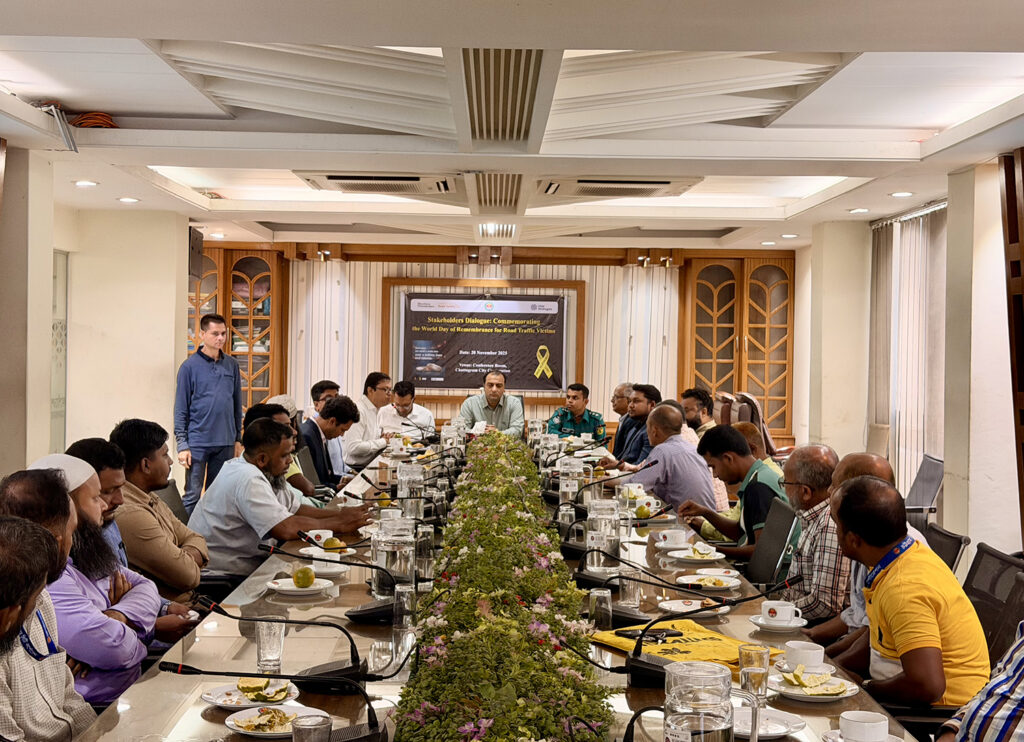
In Chattogram, the city hosted a stakeholder meeting and media roundtable centered on the dangers of speeding. A crash survivor delivered a powerful, personal account of loss and recovery, urging all drivers to honor speed limits. Civil society groups and officials from the Chattogram City Corporation and the Bangladesh Road Transit Authority emphasized the need for stronger enforcement and speed-calming measures. Bangladesh has now put groundbreaking regulations in place that align speed limits nationally with WHO guidelines.
Dhaka North brought government agencies, partners and advocates together for a media roundtable that highlighted the urgent need for stricter speed enforcement. The conversation grew especially poignant when a parent who lost his daughter in a bus crash shared his story. Technical experts added insight on how the city can continue improving road safety, representing organizations including BRAC, a locally led international development organization; the Dhaka Transport Coordination Authority; the World Health Organization; and the Bangladesh Road Transit Authority.
Brazil (Campinas, Recife, Salvador, São Paulo State)
Campinas drew significant public attention and media with a virtual-reality crash simulation, allowing people to experience firsthand the consequences of a motorcycle crash caused by drink driving. Emdec, the agency that manages transportation and traffic services in Campinas, and SAMU, Brazil’s national pre-hospital emergency medical service, reenacted the crash and emergency teams responded in real time, allowing passersby to witness the seriousness of such crashes. After the demonstration, educators handed out white roses and informational leaflets in honor of victims. A survivor testimony video featuring a quadriplegic man involved in a car crash because of drink driving was shared on social media, extending the impact beyond the in-person audience.
Recife approached remembrance through citywide public awareness efforts. Billboards honored the 149 lives lost in 2024, and an enforcement operation focused on motorcyclists, who are prone to taking risks. The activities reinforced key messages about the relationship between speeding and deaths, underscoring the city’s ongoing commitment to Vision Zero.
Salvador held a symbolic ceremony at Dique do Tororó, a historic urban lake and park, where the city unveiled a memorial panel displaying 2024 road-safety data to honor the 148 lives lost. Guided by the message “Every number has a name. Every life lost is a talent the world will never see,” the event connected the global “Lost Talents” theme to the city’s lived realities.

Colombia (Bogotá and Cali)
Bogotá marked the day with a candlelight vigil led by Secretary of Mobility Claudia Díaz, where 200 attendees paid tribute to those who lost their lives in traffic crashes this year. The city also held dialogues with victims and their families, reaffirming Bogotá’s continued dedication to building safer streets.
In Cali, undersecretaries Sergio Moncayo and Carlos Santacoloma presided over a ceremony commemorating the 245 people who had died in road crashes to date in 2025. Civil society organizations and traffic agents joined the observance, reinforcing community solidarity around road-safety initiatives.
At the national level, Colombia’s National Road Safety Agency commemorated the occasion by launching “We Beat for Life,” a digital campaign featuring a symbolic beating heart to underscore the value of protecting life on the roads. The agency also hosted remembrance events in Bogotá, Cartagena, Cúcuta, Armenia and Sabaneta. In each location, participants engaged in a kintsugi-inspired activity—piecing together a symbolic heart to represent resilience, shared responsibility, and support for victims and their families.
Ecuador (Guayaquil and Quito)
Guayaquil’s commemoration included a testimonial from a victim’s family, a survivor reflection, and other messages. The city announced its commitments to road safety and observed a minute of silence. Participants joined an interactive activity, filling three canvases with messages that formed “2–6–0” to represent the number of lives lost on the city’s roads in 2024.
Quito unveiled a new monument dedicated to families who have lost loved ones, serving as a lasting reminder of the human toll of road traffic violence and the need for stronger safety measures. The city also relaunched its road safety campaign, “Every life matters, slow down,” calling attention to the deadly link between speed and crash severity.

Ethiopia (Addis Ababa)
In Addis Ababa, the city partnered with the African Union to commemorate World Day of Remembrance alongside Africa Road Safety Day under the global theme, “Lost Talents.” The event drew high-level officials and international partners. Activities included panel discussions and a road safety pledge-signing ceremony that brought together over 300 participants. Adew, a teacher and father, survived a severe road traffic crash in Addis Ababa in 2012 that left him with permanent organ damage, limited mobility, and lasting psychological and economic hardship. His story reflects resilience and purpose through his continued educational work and the co-founding of the Kidy Foundation to support and advocate for victims and their families.
On Dec. 9, in collaboration with the Traffic Management Authority and Black Lion Hospital, Addis Ababa also honored traffic victims through a march. Led by the Police March Band, over 150 participants walked from the Adwa Victory Memorial Museum to Black Lion Hospital, followed by a moment of silence and candle lighting. Wondimu Seta, Addis Ababa City General Manager, and Yabibal Addis, head of the Addis Ababa City Transport Bureau, attended as guests of honor, alongside speakers from Black Lion Hospital, World Resources Institute, Jimma University, and Abet Hospital, where officials visited severely injured patients.

Ghana (Accra and Kumasi)
Accra hosted a solemn candlelight ceremony led by the National Road Safety Authority, where survivors shared moving stories. City officials—including the mayor—visited a major lorry park to speak with drivers and encourage adherence to road safety rules including speed limits and drink-driving laws.
In Kumasi, stakeholders gathered at Komfo Anokye Teaching Hospital to discuss strategies to reduce crashes and fatalities. The mayor reaffirmed the city’s commitment to improving road safety. Participants toured hospital wards to meet crash survivors, and the city provided support items to patients.
Kenya (Mombasa)
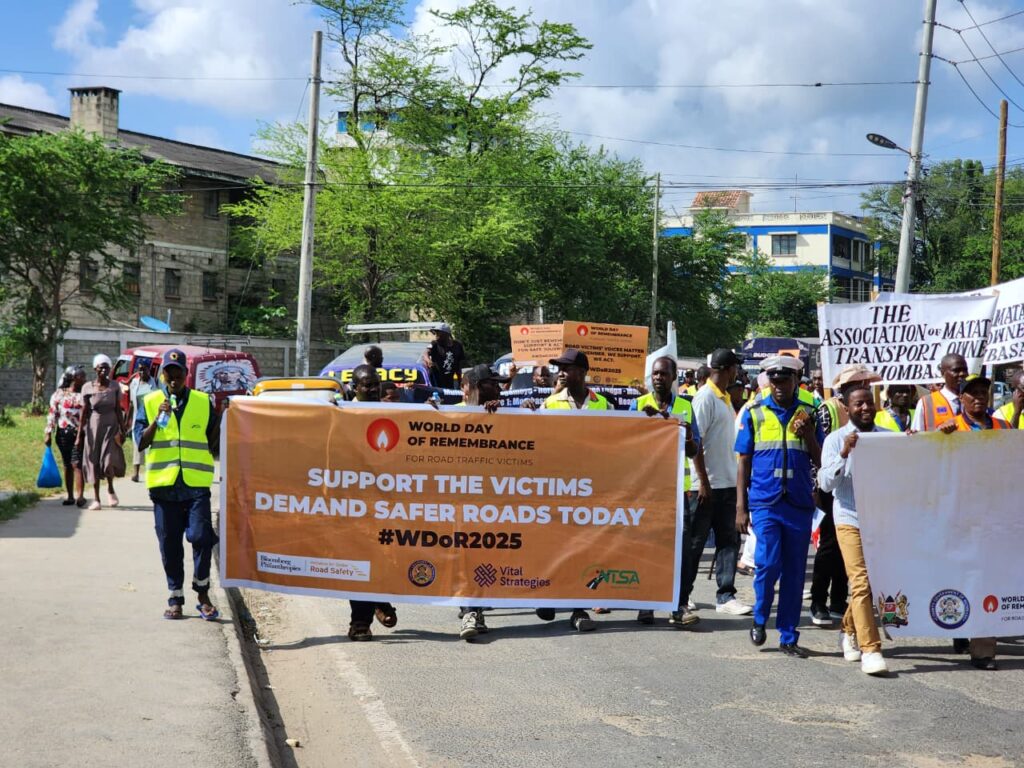
Mombasa honored crash victims with a walk followed by a candlelight ceremony. Road safety agencies also repainted zebra crossings near schools to improve visibility for children and others as they cross the street.
Mexico (Guadalajara)
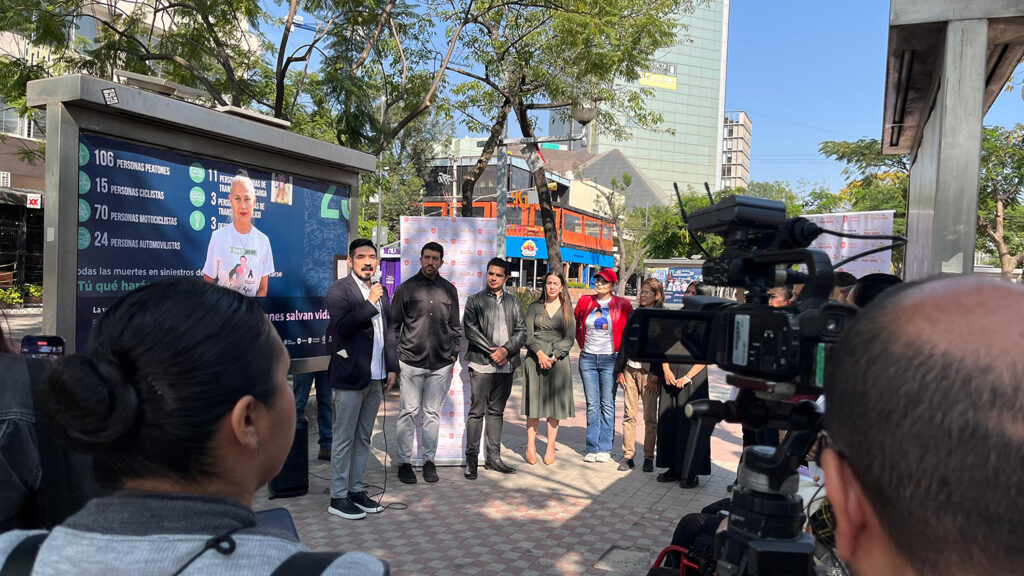
Guadalajara held a press conference and launched “Your Actions Save Lives,” a public exhibition installed along the Chapultepec corridor, an area with one of the highest crash rates in the city. The exhibit featured photos, testimonials, and data from the city’s 2024 Road Safety Report. Government leaders, civil society groups, and victims’ organizations participated, generating coverage across media and social platforms to bring attention to the lifesaving effects of safe-driving behaviors.
Uganda (Kampala)
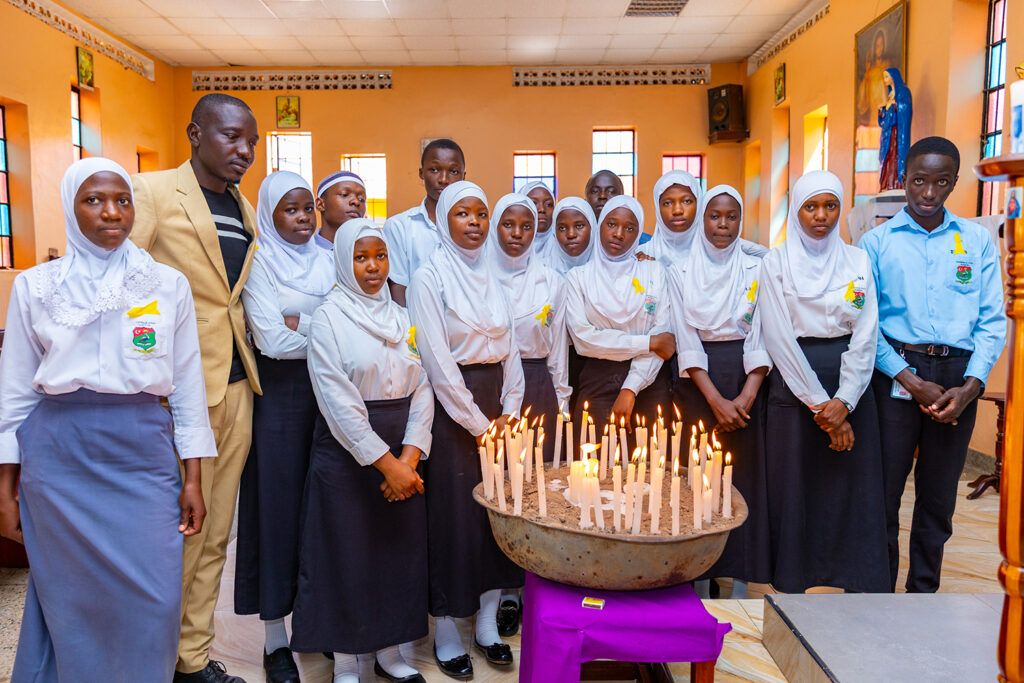
Kampala observed the day with a national prayer service at St. Joseph’s Catholic Church. Government officials, survivors, victims’ families, and road safety partners came together for the ceremony, which included a visit to hospital wards to meet crash survivors and honoring the memories of road crash victims through a candlelight tribute. One of the survivors who told their story was Christine Mbawa, who survived a devastating multi-vehicle crash in Kampala in 2019 that claimed lives and left her with life-changing injuries, including the loss of both legs. While honoring those who did not survive, her story reflects resilience, gratitude for life, and the lasting human cost of road traffic crashes. Officials emphasized their continued commitment to preventing future loss of life through road safety initiatives.
Vietnam (Hanoi, Da Nang, Ho Chi Minh City)
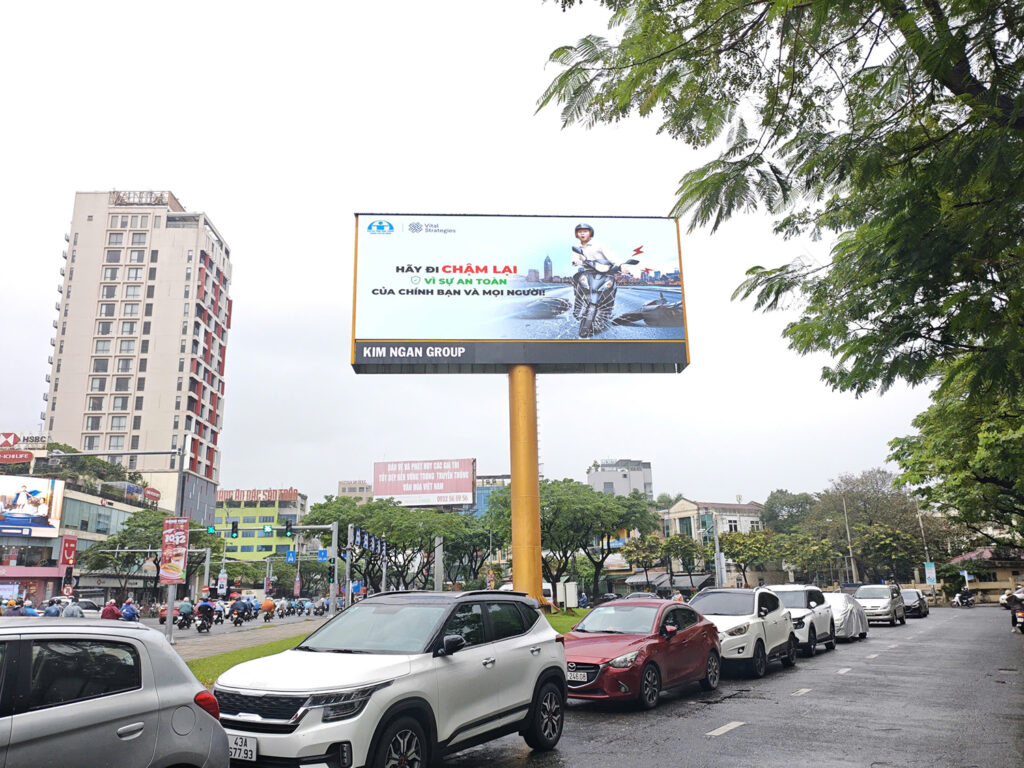
In Vietnam, Ho Chi Minh City and Da Nang launched a campaign to deter speeding, which highlights the difference in outcomes from a small change in speed and reminds drivers that slowing down is crucial in reducing fatalities. The campaign, which was paired with enforcement, was aired across local TV, social media, posters, banners, outdoor visuals, LED screens in public spaces, and city bus systems.
About Vital Strategies
Vital Strategies believes every person should be protected by an equitable and effective public health system. We partner with governments, communities and organizations around the world to reimagine public health so that health is supported in all the places we live, work and play. The result is millions of people living longer, healthier lives.
To find out more, please visit www.vitalstrategies.org or follow Vital Strategies on LinkedIn.
About the Bloomberg Philanthropies Initiative for Global Road Safety
The Bloomberg Philanthropies Initiative for Global Road Safety (BIGRS) works with the world’s leading road safety organizations to implement road safety activities and coordinate with in-country governmental and non-governmental stakeholders. BIGRS places an emphasis on achieving outcomes, and on using high-quality monitoring and evaluation mechanisms to continually assess progress.