
Tobacco use remains a major public health concern in India: 28.6% of adults are tobacco users, approximately 1.35 million annual deaths are attributed to smoking and smokeless tobacco use and tobacco use poses extreme economic costs. Nearly 200 million people use smokeless tobacco, causing significant health harms. As the tobacco and nicotine sector continues to transform—introducing novel products, expanding digital promotion and diversifying its portfolio—there is a pressing need to shift from fragmented efforts to more robust systems, coordinated cross-sectoral collaboration and forward-looking policy frameworks.
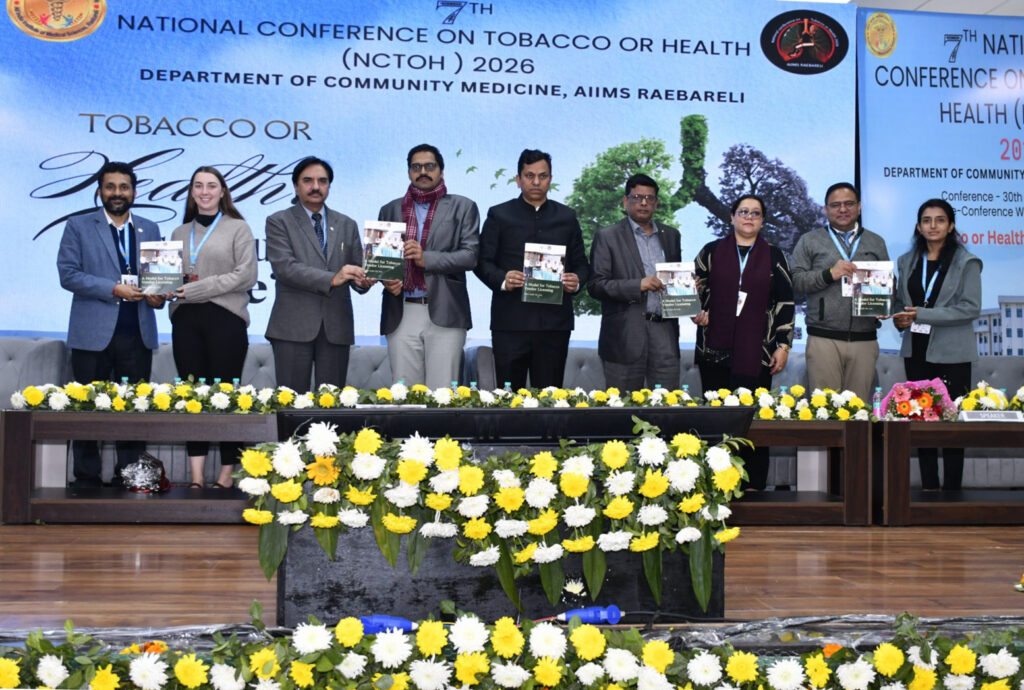
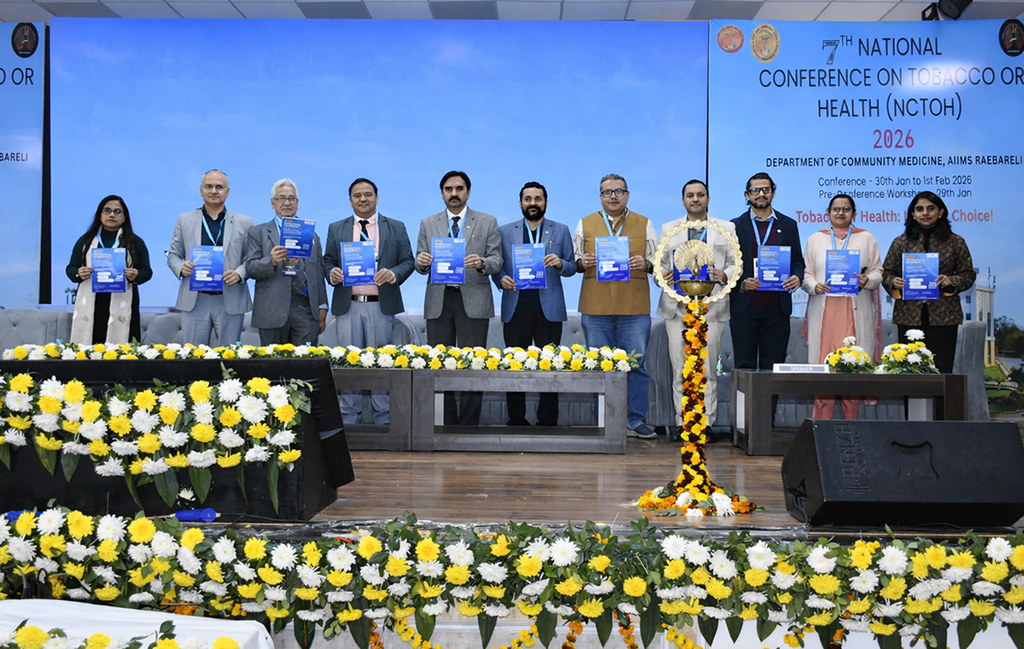
From Jan. 30 to Feb. 1, 2026, more than 300 stakeholders from across sectors convened at the 7th National Conference on Tobacco or Health (NCTOH), held at the All India Institute of Medical Sciences, Raebareli, Uttar Pradesh. The conference was inaugurated by Honourable Shri Brajesh Pathak, Deputy Chief Minister, Government of Uttar Pradesh, reinforcing the high-level political commitment to strengthening tobacco control in India.
Vital Strategies participated with seven high-impact sessions, including a one-day pre-conference workshop on emerging challenges and opportunities in tobacco control. Other sessions included:
- MPOWER+: Past, Present and Future (plenary)
- Is “Tobacco Control” shaping our environment and overall health outcomes? 20 years of the WHO Framework Convention on Tobacco Control (panel discussion)
- Tobacco Vendor Licensing: The missing link in effective enforcement of tobacco control laws in India (panel discussion)
- Cessation at the Core: Understanding National Perspectives and State Innovations (symposium)
- Beyond the Health Sector: Whole-of-Government and Whole-of-Society Approach to Tobacco Control (symposium)
- Leveraging Digital Innovations for Strengthening Tobacco Control in India: Present Status, Challenges and Future Roadmap (symposium)
The sessions highlighted the need for more robust implementation systems, stronger inter-state learning, and renewed momentum for implementation and systems strengthening.
“Evidence-based policy and strong inter-institutional collaboration are critical to reduce the burden of tobacco-related diseases and safeguarding the health of future generations,” said Shri Pathak, Deputy Chief Minister, Government of Uttar Pradesh, addressing the gathering. “Equally important is the role of civil society, whose community engagement and accountability efforts ensure that policies are effectively implemented on the ground.”
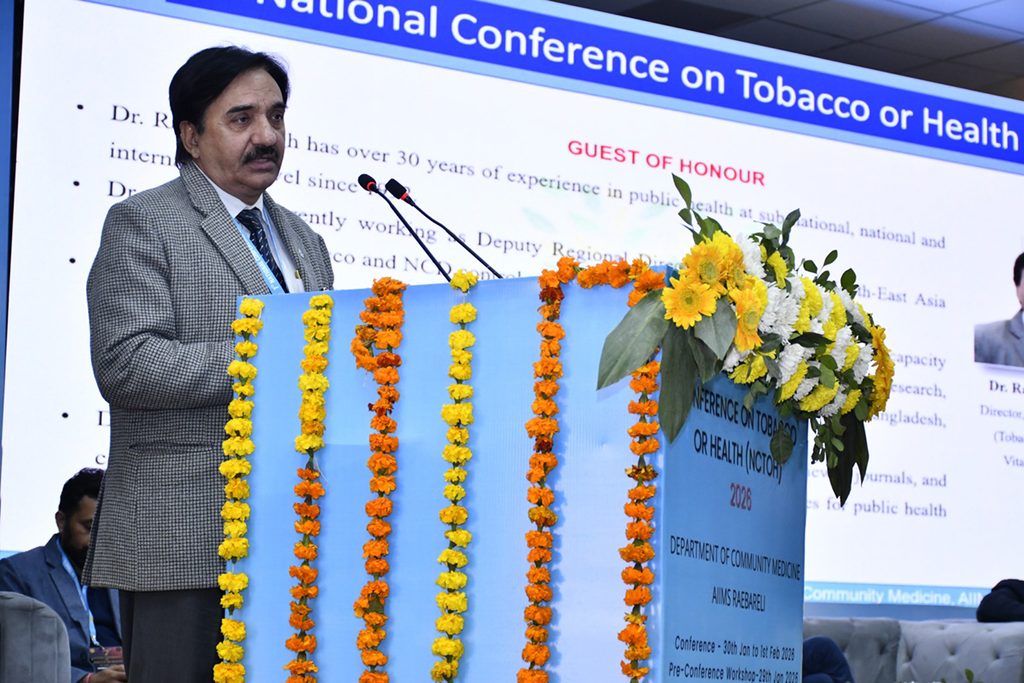
“As the tobacco landscape evolves, our response must be equally adaptive, said Dr. Rana J Singh, Director, Southeast Asia, Tobacco Control, Vital Strategies. “The discussions and evidence presented reaffirm that coordinated policy implementation and community-driven action are central to achieving long-term impact.”
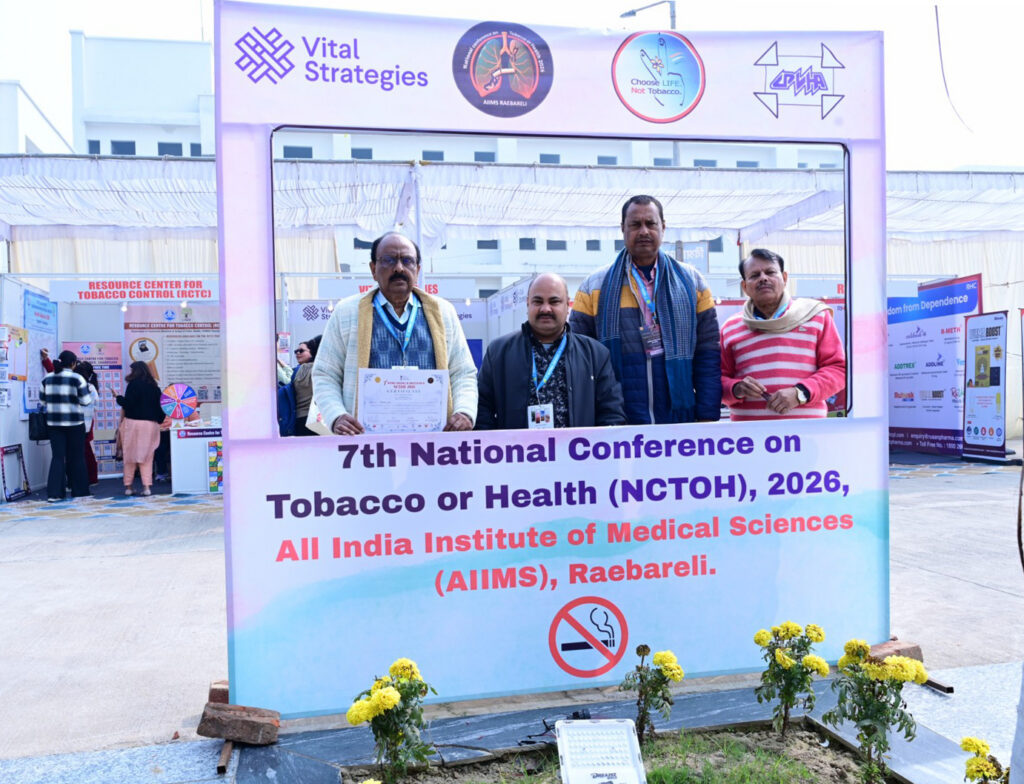
The conference featured more than 50 scientific presentations by Vital Strategies and its partners, converting field-level learnings into practical insights to support the expansion of evidence-based tobacco control across India. This was further strengthened by a vibrant on-site presence, through an interactive booth, a selfie station and a tobacco awareness performance by students from Lucknow University, collectively boosting engagement and reinforcing key tobacco control messages.
Key Discussion Points Across the Conference
- Tobacco control must evolve beyond traditional frameworks, integrating forward-looking measures, protection from industry interference, evidence-based approaches and multisectoral accountability.
- Cessation needs to be system-embedded with focus on population-level strategies such as quit lines, mCessation and brief advice integration into primary health care and state programs.
- Enforcement and accountability can be strengthened, with tobacco vendor licensing emerging as a critical tool to increase compliance at the point of sale and advance India towards tobacco endgame.
- A whole-of-government and whole-of-society approach is essential, recognizing the role of non-health sectors, local governments, civil society, academia and youth in sustaining impact.
- Digital innovations can accelerate reach and effectiveness by exploring their scope in monitoring, surveillance, enforcement, cessation and resource platforms that are guided by evidence.
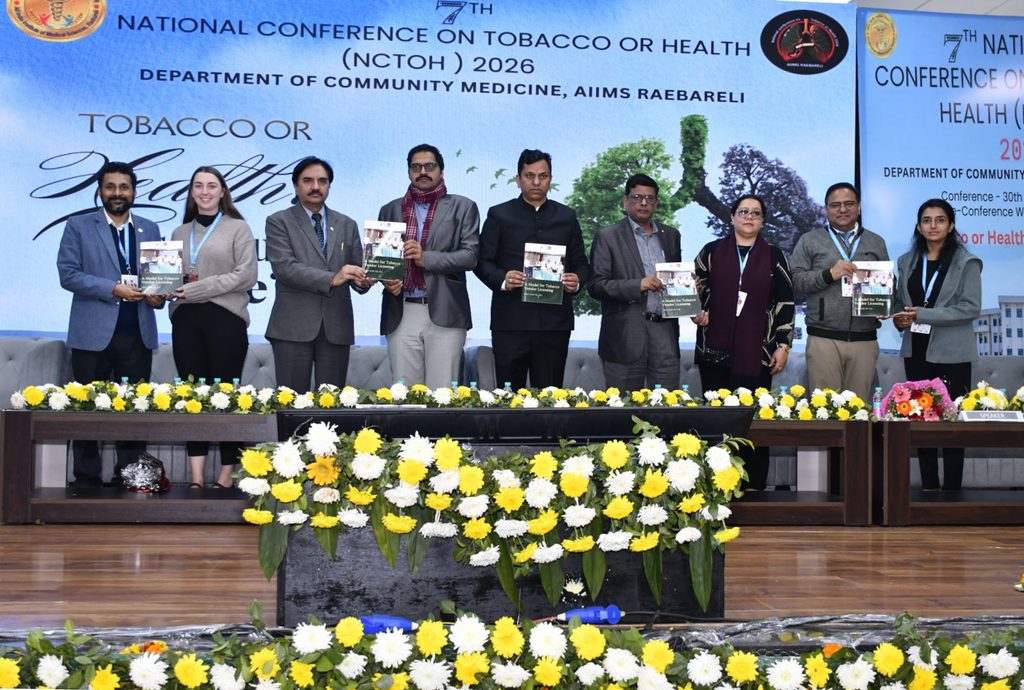
Vital Strategies and its partners released two high-impact knowledge products
- Shikshit Rojgar Kendra Prabandhak Samiti (SRKPS), Rajasthan, a partner in Vital’s Global Implementation Program, released a policy brief on tobacco vendor licensing. Sikar has pioneered a tobacco vendor licensing model in the city, which has led to measurable progress in reducing vendor density and tobacco advertisements.
- Centre for Public Health Research (CPHR) at Manbhum Ananda Ashram Nityananda Trust (MANT), West Bengal, released a policy brief, “Revisiting the tax exemptions in bidi industries in India,” that examined the potential health and revenue impact (15.89 million fewer bidi smokers and an additional INR 32.79 billion) of bringing exempted bidi production enterprises (i.e. INR < 4 million) into the tax net. CPHR is a partner in Vital’s tax program.
Vital Strategies remains committed to supporting India’s efforts to move from intent to impact, through evidence, partnerships and policies that are fit for today’s realities and tomorrow’s risks.
For more information on Vital Strategies’ work in tobacco control, please visit our Tobacco Control Program page.