
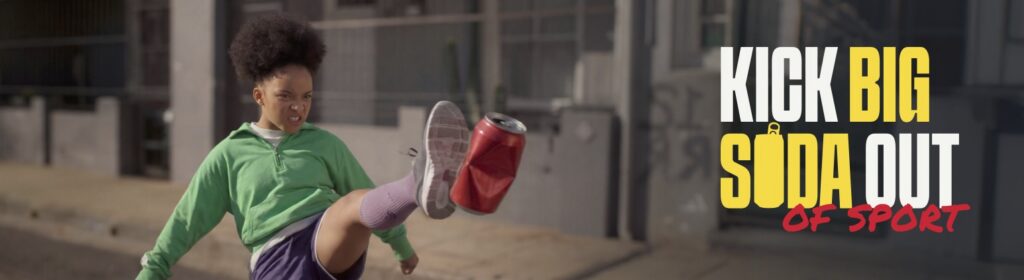
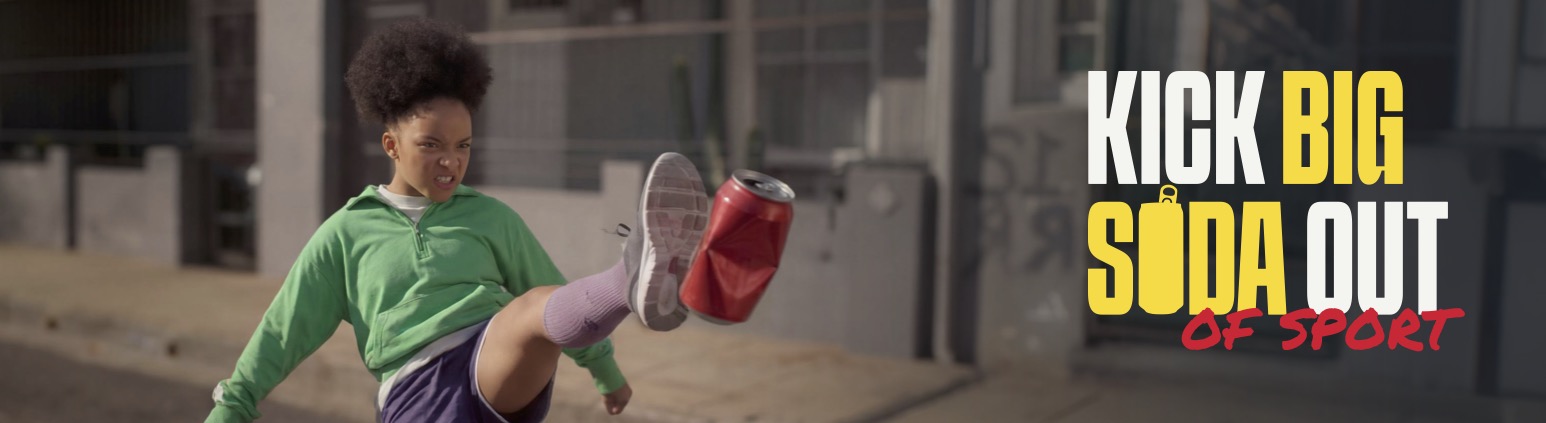
The 2026 FIFA World Cup, which kicks off on June 11 in the United States, Mexico and Canada, is expected to be the largest and most-watched tournament in history. Billions of fans around the world will tune in. And right alongside them, Coca-Cola will be everywhere: around stadiums, in broadcast ads and on social media.
Vital Strategies is a key partner of Kick Big Soda Out, a rapidly growing global movement challenging the undue influence of Big Soda in sport and building public pressure for urgently needed systemic change.
In 2024, Food Policy Program partners from Barbados, Brazil, Colombia and Jamaica recognized that fighting the multinational beverage industry required a global stage and a coalition willing to demand real accountability—not just for driving diet-related disease, but also for exploiting water sources and quietly interfering in the policymaking process. That recognition became Kick Big Soda Out. Launched during the 2024 Paris Summer Olympics, the movement called on the International Olympic Committee to end its sponsorship deal with Coca-Cola. Kick Big Soda Out then expanded during the 2025 FIFA Club World Cup with the same demand of FIFA, bringing total support to more than 523,000 individuals from 195 countries and 97 organizations across 35 countries.
Now the movement is taking on the 2026 FIFA World Cup, where up to 6 billion fans—many of them children—will be exposed to marketing that links football’s biggest stars with sweetened beverages tied to diet-related diseases such as Type 2 diabetes, obesity and heart disease, that lead to disability and premature death for millions of people each year.
Sportswashing: How Big Soda Uses a Beloved Sport to Sell Harmful Products
Coca-Cola has sponsored the FIFA World Cup since 1978, embedding itself into football’s biggest moments for decades. By aligning its brand with athletic excellence, Coca-Cola perpetuates a false sense of health and legitimacy that directly contradicts what sport represents—a marketing practice known as sportswashing. The 2026 tournament raises the stakes further: Coca-Cola has already launched a comprehensive World Cup campaign with a digital-first strategy designed to align itself closely with the tournament at an unprecedented scale.
The Harm Is Real and Well Documented
Sweetened beverages are ultra-processed products that offer little to no nutritional value and are a key driver of nutrition-related disease worldwide. For every 250-ml increase in daily intake, the risk of Type 2 diabetes rises 19%, the risk of obesity rises 12% and the risk of cardiovascular disease rises 13%. Type 2 diabetes is already one of the fastest-growing global health threats, affecting an estimated 537 million adults today. In 2020 alone, 2.2 million new cases of Type 2 diabetes worldwide were directly attributable to sugary beverage consumption.
Yet Big Soda continues to pour resources into reaching young people through sport, well aware of its influence. Children recall a higher proportion of food and beverage sponsors than non-food sponsors, and report feeling better about a company simply because it sponsored their favorite team or athlete. Celebrity endorsements on unhealthy products lead parents to rate those foods as more nutritious, demonstrating how Big Soda’s grip on sport shapes dietary choices.
The harms extend beyond health. Coca-Cola is one of the world’s leading plastic polluters and, alongside other Big Soda companies, contributes to water stress, often in already resource-poor communities.
It’s Been Done Before: Tobacco Advertising Was Kicked Out of Sport
The movement to remove Big Soda sponsorships from sport mirrors the earlier fight against tobacco advertising. Just as tobacco companies were eventually banned from most sports sponsorship due to overwhelming evidence of harm, Big Soda deserves the same scrutiny. FIFA itself stopped accepting tobacco advertising 40 years ago—and sport didn’t suffer. It evolved.
The financial argument doesn’t hold up either. Coca-Cola accounts for approximately 2% of FIFA’s total projected revenue. Replacing that income is not the obstacle. The question is simply whether FIFA has the will to act.
What We’re Calling on FIFA to Do
Kick Big Soda Out will deliver a formal letter to FIFA President Gianni Infantino—representing the voices of every supporter and partner organization—with three clear asks:
- Publicly commit to ending its sponsorship agreement with The Coca-Cola Company.
- Establish a partnership policy that recognizes healthy sport and abides by FIFA’s corporate sponsor standards of integrity, inclusivity and responsibility—excluding ultra-processed food and beverage sponsors from 2030 onward.
- Champion partners who reflect the health and future of the game.
As the steward of the world’s most beloved sport, FIFA has the power to lead this shift and to demonstrate that the game’s values are not for sale.
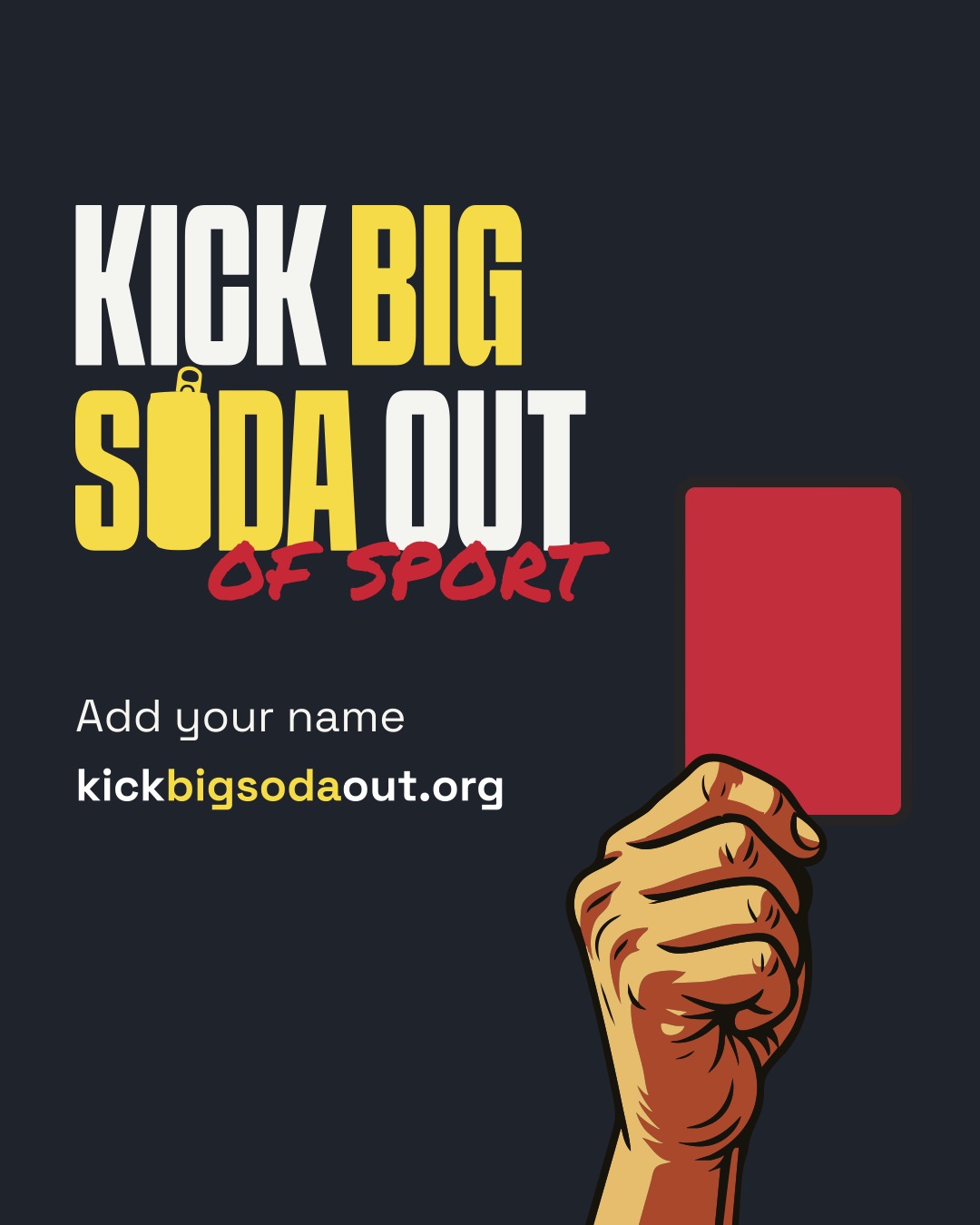
Join the Movement Today
Visit kickbigsodaout.org to join the movement and become part of a growing coalition of individuals and organizations standing up for sport that truly reflects the values of its fans.
The campaign runs globally across social media and features creator-led content, media engagement and grassroots activations. Follow along and engage throughout the tournament and beyond:
- Instagram: @KickBigSodaOutOfSport
- X/Twitter: @KickBigSodaOut
- TikTok: @KickBigSodaOut
- Facebook: Kick Big Soda Out
- YouTube: @KickBigSodaOut