What does it take to help hundreds of thousands of people quit tobacco? It often starts with something as simple as a healthcare provider taking a few minutes to offer brief advice. One trained provider. One short conversation. One patient at a time.
Across India, healthcare workers are increasingly becoming the first line of support for tobacco cessation. Through Vital Strategies’ collaborative Cessation Program, small actions taken every day by frontline providers are building a larger movement toward a tobacco-free future.
In India, Vital Strategies’ Cessation Program brings together multiple health programs—including the National Tobacco Control Programme, National Tuberculosis Elimination Programme, National Mental Health Programme, National Oral Health Programme, government health program Rashtriya Kishor Swasthya Karyakram, and other key stakeholders—so that tobacco cessation becomes part of routine healthcare delivery rather than a standalone activity.
Integrating Cessation Into Every Healthcare Visit
“When tobacco cessation becomes everyone’s responsibility, every healthcare interaction becomes an opportunity to help someone quit,” said Dr. Rana J. Singh, Director for Southeast Asia for Vital’s Tobacco Control Division.
For many people who use tobacco, a routine visit to a primary health facility may be the only interaction they have with the health system. Recognizing this opportunity, the Cessation Program focuses on integrating brief tobacco cessation advice into existing health services with a primary health care approach.
Tailored advice of up to three minutes from a trained healthcare provider serves as an entry point for available cessation services—such as tobacco cessation centers and quitlines. When multiplied across hundreds of facilities and thousands of patient interactions, these conversations create a substantial public health impact. Initial results on the implementation of brief advice in Karnataka from 2025-2026 have been promising: 850,000 people screened for tobacco use and 380,000 provided tailored quitting advice.
Building Capacity From Districts to Communities
“When I tried to counsel someone about tobacco, the conversation felt uneven,” one healthcare worker said. However, after being trained, “the brief advice framework gave me a clear architecture for the conversation.”
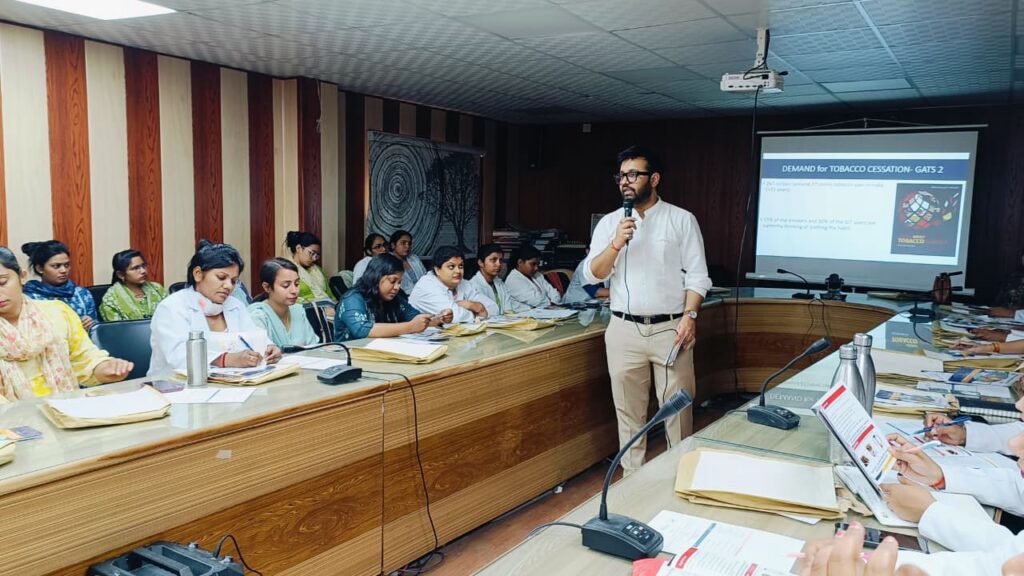
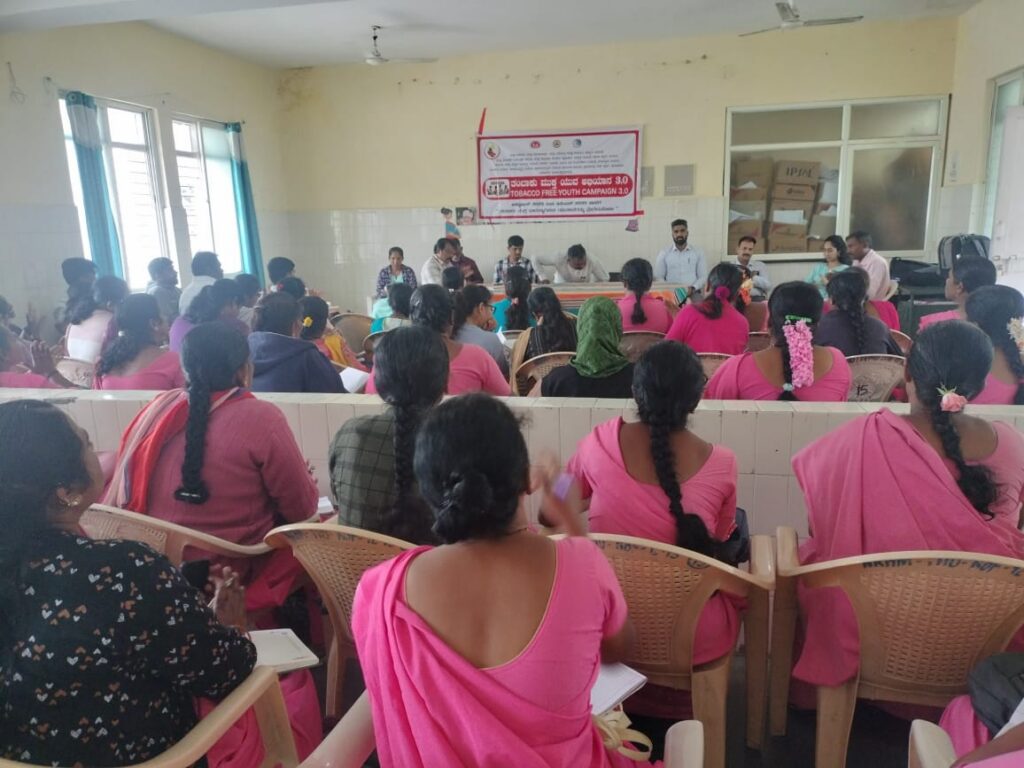
A key component of the initiative is strengthening healthcare professionals’ skills and confidence to impart brief advice. District-level trainings create a foundation of knowledge and leadership, while sub-district trainings help extend these skills to providers working closest to communities. This cascading approach is feasible and cost-effective, and leverages the existing training framework adopted by states, expanding reach while building local ownership and sustainability.
Measuring Progress, Strengthening Systems
Beyond training, the Cessation Program emphasizes reporting and accountability. Tracking brief advice delivery, monitoring trained providers and documenting program performance makes tobacco cessation more visible within routine health services.
The story of tobacco cessation is often told through individual successes. But quit attempts are more likely to succeed when supported by a network of trained providers, supportive health systems and coordinated programs with sensitized leadership working together to make change possible.
As this work continues, one lesson stands out: Lasting public health impact is often built through small, consistent actions. By bringing multiple health programs together around a shared goal, the Cessation Program is creating stronger systems that can provide population-level impact, one conversation at a time.
To learn more about integrating and implementing population-level cessation services, read Vital’s report “Strengthening the Tobacco Cessation Ecosystem: Strategies for Improving Access, Use, Success, Synergy and Impact at the National, Subnational and Organizational Levels.”