By Skye Hart, Technical Advisor for Indigenous Health and Drug Use Initiatives, and Grace Romo, Communication Associate
As the overdose crisis continues to devastate families and communities across the country, many Indigenous communities are responding and healing by drawing on the strength of their cultures as they implement innovative harm reduction programs rooted in tradition.
The overdose crisis disproportionately affects Native people: From 2019–2024, Native people in the U.S. experienced the highest rates of fatal overdose of any racial or ethnic group, at a rate twice that of the general population. Similar state-level inequities in fatal overdose rates also exist in many states, including several where Vital Strategies is currently working.
Such high rates of overdose deaths are driven by—and an extension of—the impacts of centuries of ongoing genocide, colonization and oppressive policies designed to destroy Native nations, cultures and lives. Despite these attempts to decimate Indigenous ways of life, Indigenous peoples and cultures have endured in large part by drawing on Indigenous knowledge and healing through culture.
Now, Indigenous communities are again looking to the strengths of their cultures and communities as they respond to yet another extension of colonial harm: the overdose crisis.
This approach to addressing the overdose crisis is referred to as Indigenous (or Native) harm reduction, which the National Harm Reduction Coalition’s Native Harm Reduction Toolkit explains as “creating and supporting policies, programs, and practices that are grounded in cultural traditions, Indigenous knowledge, ceremonies, land, and languages.” This can look like adapting “mainstream” harm reduction approaches to the culture and needs of a Native community, as well as implementing culture-based services such as language classes or ceremony to address the overdose crisis.
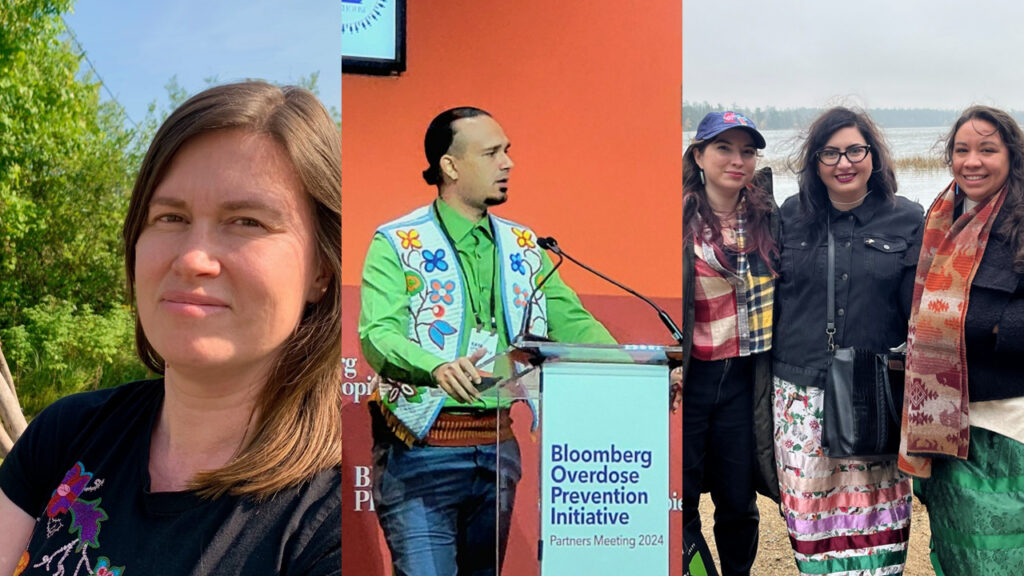
Vital Strategies interviewed three Indigenous harm reduction leaders to learn about the knowledge, perspectives and values they each bring to this innovative, lifesaving work:
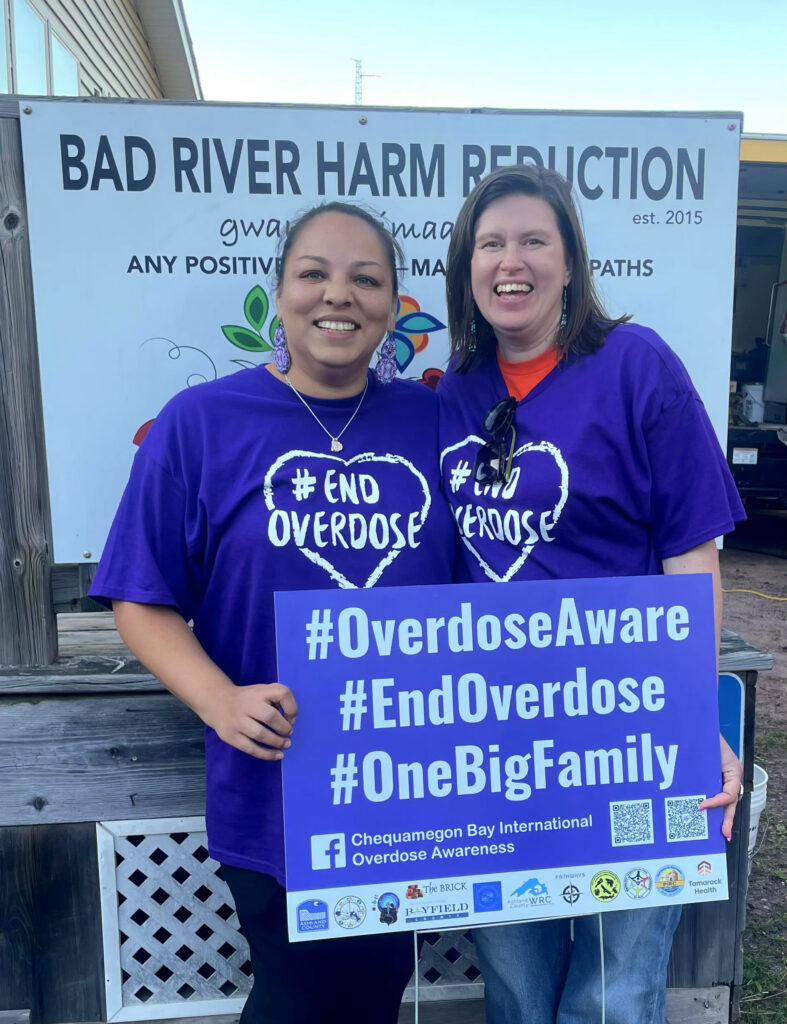
- Philomena Kebec (Ojibwe), Economic Development Coordinator, Bad River Band of Lake Superior Chippewa Indians (Wisconsin)
- Kaya Littleturtle (Tuscarora), Program Manager, United Katehnuaka Longhouse Good Mind Initiative (North Carolina, South Carolina)
- Tiffany Pyette (Cherokee descendant), Co-Executive Director, Appalachian Rekindling Project (Kentucky, Virginia, West Virginia, Tennessee)
How has being Native and working in Native communities shaped your approach to harm reduction work?
Philomena Kebec: In our Anishinaabe belief system, everyone who’s here has a purpose in life—multiple purposes in life. As a young person, we begin learning about our purpose when we receive our spirit name. Sometimes you have more than one name that comes to you. My spirit name is babiwash and it refers to the love of the Creator that is freely given to Creation. That relates to my purpose in life and my role in harm reduction, which is unconditional love: radically and unconditionally loving people in (and beyond) our community, absolutely including folks who use drugs.
Kaya Littleturtle: Being Native shapes everything about my approach because my cultural identity is one of the foundations of how I understand healing. I believe harm reduction must be culturally rooted, culturally responsive, and grounded in the teachings our ancestors left for us. Working in our own communities continues to show me how much our people need access to their traditional medicines, their ceremonies, and their identity as part of their healing journey. Our culture is medicine, and approaching harm reduction through that lens builds trust, dignity and connection. We carry a responsibility to each other, and that responsibility guides my work every day.
Tiffany Pyette: Because of medicine wheel teachings, I know that harm reduction cannot start and stop at medical overdose reversal alone. I know that we have to tend to the physical, the emotional, the mental and the spiritual parts of ourselves because of those teachings. Community activity, tradition, plant support, gifting culture, creative pursuits, etc., are ways we use those teachings to make sure that all our relations get community care and know they’re needed.
What is your favorite part about doing this work?
Philomena Kebec: I love to bear witness to the process of transformation that happens when people start receiving the connection and support that they’ve been longing for. What generally happens here is that connections begin to be made and then trust is formed. And through that trust, a relationship forms, and within relationship, the process of healing starts. You can almost even see that sometimes, visually. When people come in, and they’re really shut down and closed off. And then they start brightening up, the more contact that they have with the other program participants, with our staff, with folks that are involved in positive community action.
Kaya Littleturtle: My favorite part of this work is saving lives and helping people reconnect with the parts of themselves that trauma tried to take away. Seeing someone rediscover their strength or begin to heal reminds me why this work matters. It is powerful to witness culture bringing people back to balance and reminding them that they are loved. Helping someone find their way back to their own medicine is one of the greatest honors. Every person who keeps going is a reminder of the resilience carried by our ancestors.
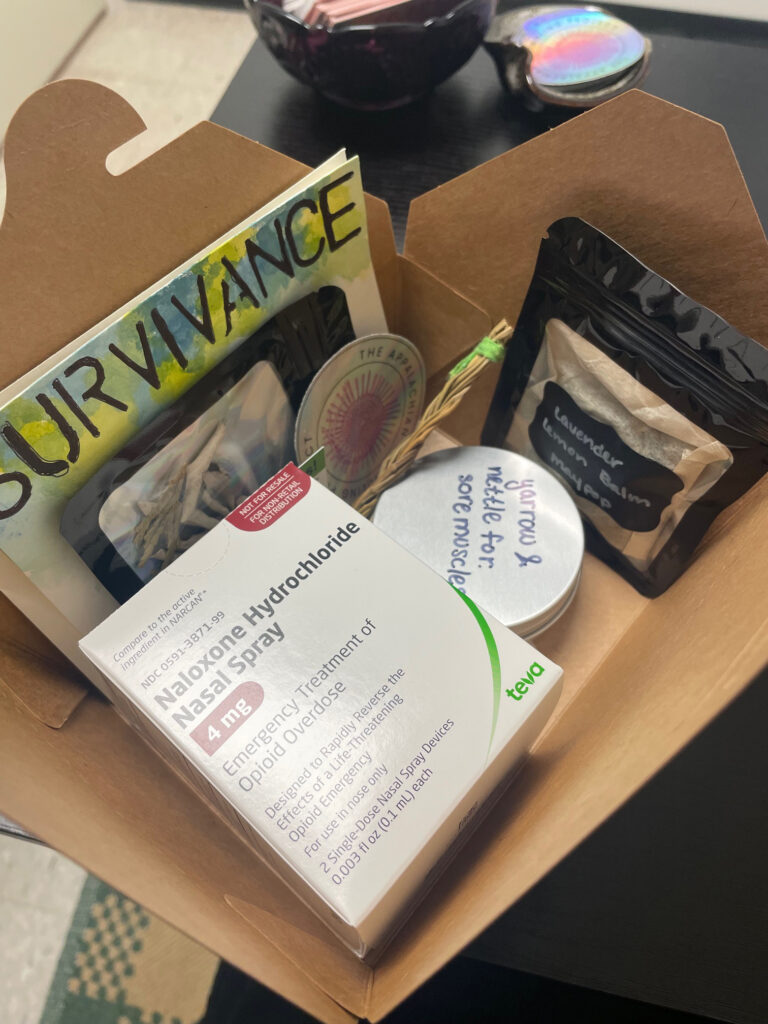
Tiffany Pyette: My favorite part of this work is when someone who has been on the receiving end of our overdose response kits contacts me and says that they felt cared for and seen by it being culturally centered. They know someone mixed their teas with love, set the salves with intention, and tucked kind words and mini sweetgrass braids next to the naloxone, band-aids and fentanyl test strips.
What are some of the most significant barriers to your work?
Tiffany Pyette: I think a big barrier is the lack of acknowledgement in the state of Kentucky that there is a Native population, which includes Native substance users. It makes it difficult for people to receive culturally informed care if there is little awareness that there are unique needs to our community as well as unique historical traumas to navigate. I’d like to see more awareness across the board so that we can be a resource that others know to call on.
What advice do you have for other Indigenous communities looking to implement or expand harm reduction and overdose prevention programs?
Philomena Kebec: I think there’s a mistaken belief that a lot of our communities have adopted, that the way to effect change is through punitive approaches. I strongly believe that the traditional values that have guided Anishinaabe communities point to a way of healing, not through rejection and isolation, but through connection and positive reinforcement. That connection can come through a shared wonder, humor, or ceremony. But it can also come through meeting people where they’re at. Some people in our community still don’t understand why we provide syringes and injection material, but it’s designed to foster connection. It’s a way to demonstrate respect for a person’s needs and encourage the formation of trusting relationships.
I look to our traditional stories. Waynaboozhoo, who is the trickster within our Anishinaabe creation stories—he doesn’t use violence or isolation. As a rule of thumb, he does funny stuff, and he makes mistakes. He teaches us through his imperfect actions. I think it’s okay for us to try things and do things like Waynaboozhoo—take a methodological approach where, instead of adopting colonizing tools of punishment and reproach, we use our traditional values of experimentation and humor and connection, and just explore what might work, imagine the possibilities. That’s the framework that has guided what we do here in our program. … What we do is really connected to the spirit of our traditional teachings and our traditional values. We’ve known about contingency management and positive reinforcement a long, long time. And harm reduction is simply a way to get back to the roots of our wellness journey.
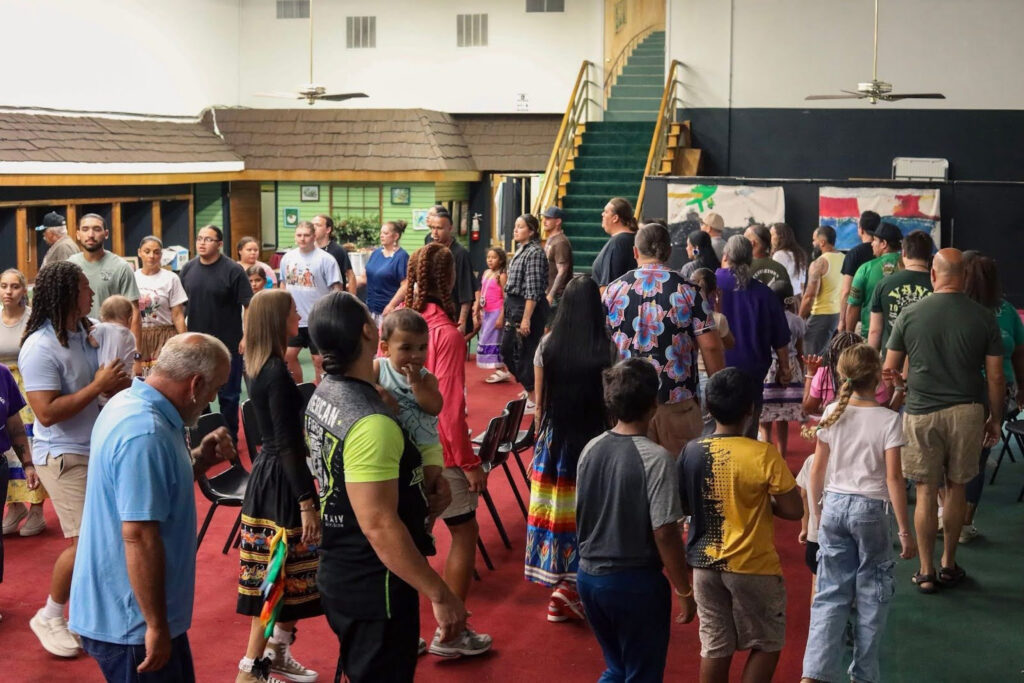
Kaya Littleturtle: My advice is to be patient with each other, because we are healing from generations of hurt. Start with community feeds and share meals, sit with people, listen deeply, and let trust grow naturally. Feed the people first; gathering around food has always been one of our strongest ways to rebuild relationships and unity. Stay consistent, stay strong, and never forget the power of your traditional ways. Each of us carries a fire inside us, and sometimes our job is simply to help one another build that fire back up again.
These interviews took place as part of Vital Strategies’ Indigenous Peoples’ Month (Native American Heritage Month) activities, with the goal of highlighting this topic beyond a single month. You can learn more about the Indigenous harm reduction work being done at each of these programs by visiting their websites:
- Gwayakobimaadiziwin Bad River Harm Reduction Program
- United Katehnuaka Longhouse Good Mind Initiative
- Appalachian Rekindling Project
Additional Resource
Vital Strategies worked with the United Katehnuaka Longhouse’s Good Mind Initiative to create a report—“Culture is Medicine: The United Katehnuaka Longhouse Good Mind Initiative as a Model of Indigenous Harm Reduction in Practice”—that describes their approach to Indigenous harm reduction, their program model and impacts, considerations for other prospective Indigenous harm reduction providers, and considerations for funders. The report can be viewed here.
About Vital Strategies’ Overdose Prevention Program
Vital Strategies is a global health organization that believes every person should be protected by a strong public health system. Our overdose prevention program works to strengthen and scale evidence-based, data-driven policies and interventions to create equitable and sustainable reductions in overdose deaths in several U.S. states and local jurisdictions.