Canary!
Using AI to Identify Online Harms and Drive Policy
Social Media Shapes Our World. Canary’s Can Help Protect Us. 8 in 10 young people (15-24) worldwide are online. The technology targeting them is cutting-edge. The policies protecting them are decades old.
Canary closes that gap with real-time monitoring of digital environments that gives governments the data and impetus to act. Traditional responses to measuring harmful digital marketing are no match for the multilingual, fast-changing environments, packed with imagery, text and video, that young people navigate daily.
Canary uses AI to analyze content at scale in real time, detecting tactics used to hook or harm young people and identifying misinformation shaping health behaviors.
The result: actionable intelligence that helps governments detect threats and respond faster.

Canary Gives Partners the Tools to Act
AI-powered analysis, guided by experts
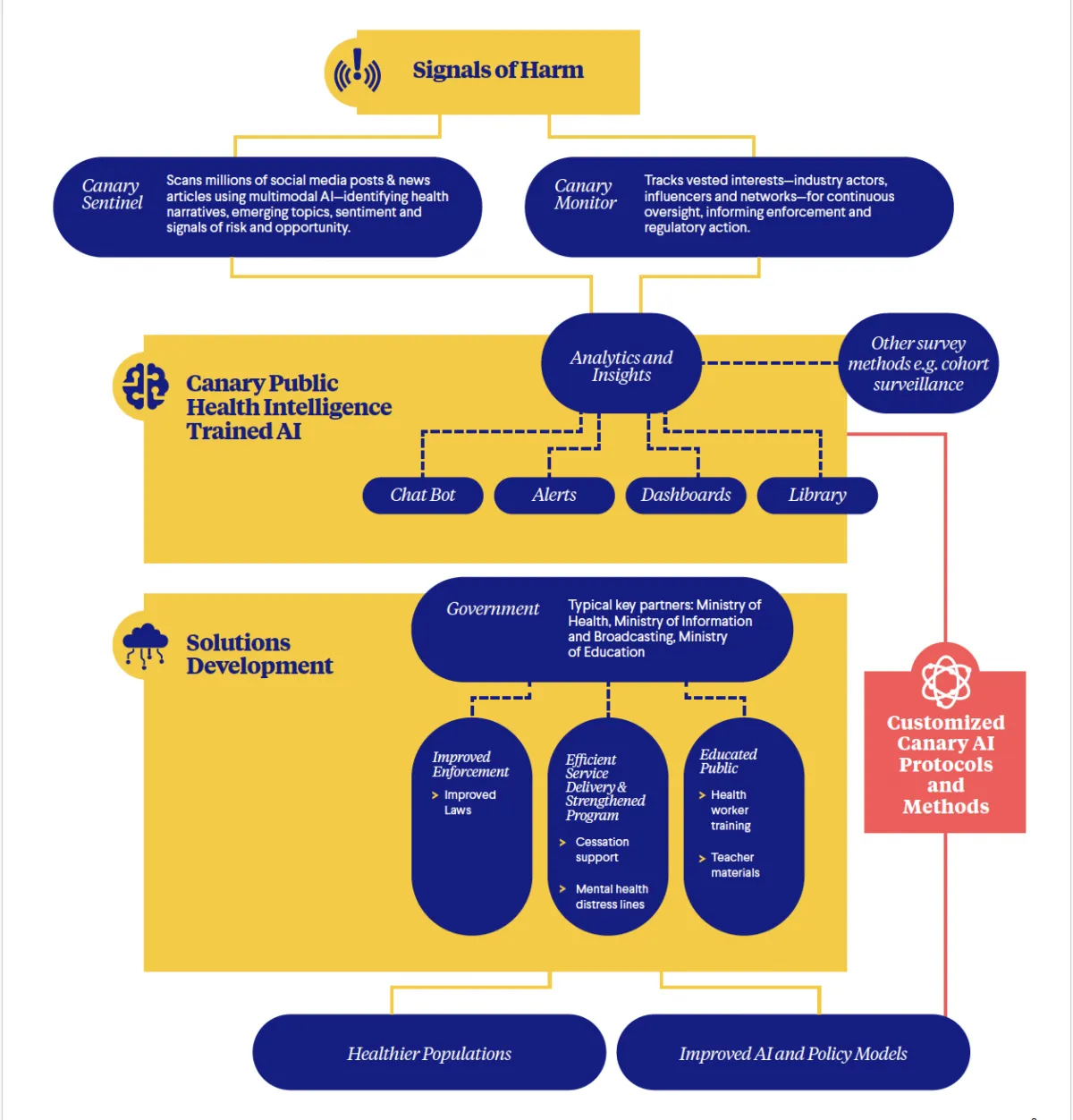
Canary continuously scans tens of thousands of social media posts and news articles, identifying patterns, vested interests and emerging trends. Insights are curated to prioritize policy action, while a digital library builds a case record over time.
Designed with partners, for impact
Working with governments, advocates, multilateral agencies and tech companies, we design a system tailored to their priorities—delivering insights through dashboards, reports and policy briefings to power advocacy campaigns, policy responses and enforcement strategies.
of Canary-identified tobacco posts taken down in a pilot enforcement program in Indonesia. The takedowns came from a joint reporting mechanism piloted by the Free Net From Tobacco coalition alongside Indonesia’s Ministries of Health and of Communication and Digital Affairs, under the country’s new health law.
policies passed, implemented or enforced with support from Canary’s data and advocacy — including Indonesia’s new health law provision regulating online tobacco marketing, and India’s 2023 COTPA Amendment Rules, which Canary evidence helped protect from dilution during a public comment period.
How Canary Works.
In short, Canary uses multimodal AI to scan millions of social media posts, news media articles and other digital media sources to identify signals of harm.
These signals are run through public health-intelligence trained AI and confirmed by human experts.
Working with partners – most often government agencies such as Ministries of Health, Ministries of Information and Broadcasting, or Ministries of Education – we leverage Vital’s public health expertise to engage in solution development. Read more in our full brief.
Where Canary Works. What We Found.
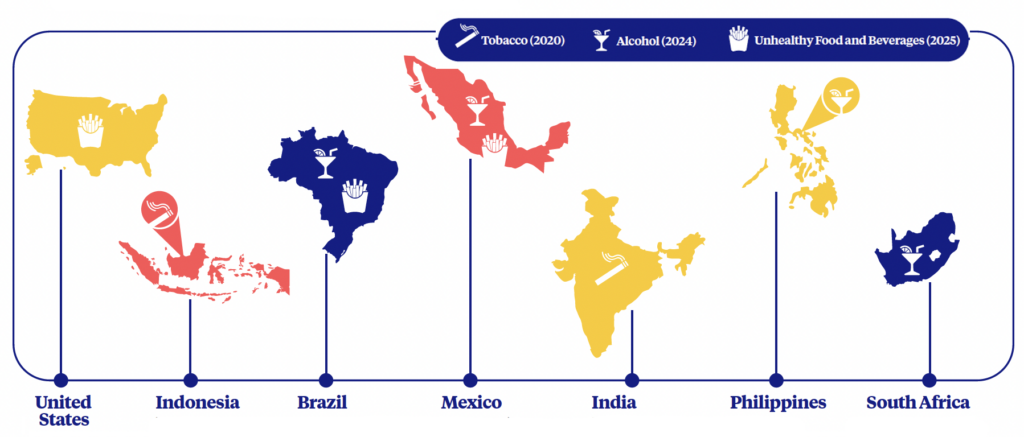
We build and adapt our monitoring as needs emerge.
United States
Sweetened beverages are positioned as hydration and performance essentials, embedded in youth sports through sponsorships and development programs.
Indonesia
Next-generation technologies with little oversight, like the metaverse, are used to promote smoking to young people.
Brazil
During Carnival, beer and spirits brands sponsor live events and enormous parties with the help of mega-celebrities with upwards of 30 million followers.
Mexico
Sweetened beverage brands use football’s biggest tournaments and stars to build brand reputation and deflect evidence linking their products to health harms.
India
Despite regulations on tobacco in film, star-fronted posters continue to promote smoking—with outsized influence on young people.
Philippines
Alcohol is promoted as a symbol of female empowerment, despite recent data showing the public is concerned about alcohol’s link to violence against women.
South Africa
Beer brands tout water protection and other environmental programs while facing criticism for excessive water use in South Africa.
Where Can Canary Go?
Mental Health
Violence Prevention
Environmental Threats
Vaccine Misinformation and Disinformation
Online Opioid Sales
GLP-1 Misinformation
News and Resources