
In 2024, nearly 80,000 lives were lost to the overdose crisis in the United States. This represents a decline in overdose deaths of 27% since 2023—a welcome trajectory. Evidence-based public health interventions for drug use remain critical to saving lives and maintaining this momentum.
Methadone and buprenorphine are opioid agonist medications and the proven gold standard treatment for opioid use disorder, dramatically reducing overdose risk and improving health outcomes for people who use drugs. Methadone has been shown to dramatically reduce cravings, withdrawal symptoms and the risk of fatal overdose; studies suggest that methadone can decrease opioid overdose deaths upwards of 59%. However, the current system of methadone dispensing was constructed with a highly regimented and punitive framework that ultimately hinders access and harms patient dignity and rights.
In her book “Liquid Handcuffs: Policing and Punishment in Methadone Clinics and the Future of Opioid Addiction Treatment,” Helen Redmond argues that the current system, which tightly constricts methadone access, must be abolished and replaced.
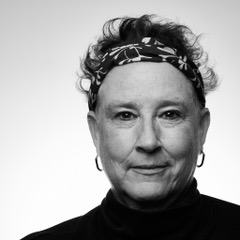
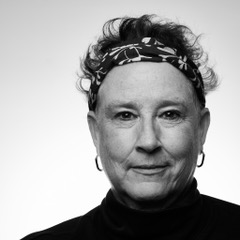
Redmond—a senior editor and multimedia journalist at Filter, a documentary filmmaker, and an adjunct assistant professor at New York University’s Silver School of Social Work—explores what she has come to see as discriminatory, stigmatizing and dehumanizing methadone clinic practices deeply rooted in the War on Drugs.
Drawing on powerful testimonies from methadone users and clinic workers, as well as Redmond’s vast experience, “Liquid Handcuffs” exposes what she refers to as the “culture of cruelty” surrounding methadone clinics.
Vital Strategies spoke with Redmond about what she hopes to accomplish with her book and what the future of methadone dispensing could look like.
What motivated you to write “Liquid Handcuffs”? What do you hope to accomplish with it?
I hope the book contributes to building a movement to abolish the methadone clinic system. It’s way past time to close these carceral, oppressive clinics. Readers will be astonished and angry when they learn what happens inside these programs.
There were two motivations for writing “Liquid Handcuffs.” The first is, I couldn’t find a book that critiques the clinic system. How could that be? Methadone has been available in the U.S. for over 50 years and has been rigorously studied. Millions of people have taken the medication and it’s the gold standard of treatment for opioid use disorder.
During the COVID-19 pandemic and for a short time after, that changed. The mainstream media discovered opioid treatment programs and reported on how patients are policed and punished. That was super important. For the first time ever, millions of readers got a glimpse of how harsh opioid treatment program regulations harm patients and drive them out of treatment. The second motivation was, I wanted people who take methadone to be seen and heard. For far too long their oppression has been hidden, minimized, unacknowledged.
You refer to the current system of dispensing methadone a “culture of cruelty.” Can you say more about why you chose these words to describe today’s system?
“Culture of cruelty” was actually coined by members of the National Survivors Union who wrote the Methadone Manifesto.
Foundational to the culture of cruelty is the massive power differential between staff and patients. Staff control access to methadone, which people need like oxygen. For noncompliance with regulations, patients can be denied medication, which is a mortal threat to their well-being and is extremely traumatizing.
Specific aspects of the culture of cruelty include: standing in lines outside during inclement weather and inside, sometimes for over an hour, to get medicated; supervised urines where staff watches a person’s genitals; witnessed ingestion, where the nurse inspects a person’s mouth to ensure the methadone was swallowed; “earning” take-home medication and then having it taken away. The culture of cruelty is based on a fundamental distrust of patients and humiliation. Low treatment retention rates are the result. This is a tragedy in the era of fentanyl because methadone cuts the rate of overdose deaths by over 50%!
In your book, you touch upon the resistance to methadone clinics in communities of color. Why did you feel like this was an important topic to include?
It was important because it’s rarely discussed and when it is, the reasons given for the resistance are often mocked or dismissed.
The opposition to methadone in communities of color has to do with racism. In the 1970s when clinics opened, they were financed and controlled by the federal government. At the same time, the Black Power movement and The Young Lords Party were fighting back against their oppression and second-class citizenship. The racist Nixon administration viewed these organizations as enemies of the state, and infiltrated and disrupted their organizing for equality. These groups thought methadone—because of government involvement, it was a synthetic opioid, plus strict regulations—was a way to control and disempower Black and Brown people. That’s understandable given the reality that clinics have a monopoly on the dispensing of methadone and patients are forced to make the opioid treatment program the center of their lives via daily dosing.
In addition, clinics in urban centers are located mainly in communities of color. In East Harlem, a predominately Black and Latino neighborhood in New York City, there are eight methadone clinics in a five-block radius. It’s called medical redlining. This hyperconcentration of clinics isn’t an accident. It’s the power of white NIMBYism. Wealthy, white neighborhoods have the power, political connections, and lawyers to block opioid treatment programs from opening in a way that low-income communities of color historically have not.
I have an entire chapter in “Liquid Handcuffs” where I unpack the nuances of the political, racial and cultural circumstances behind the opposition to methadone in communities of color.
Why do you advocate for the abolition of methadone clinics in your book, and what do you see as an alternative?
To end the opioid-related overdose crisis it has to be easier to get methadone than fentanyl. The most effective way to accomplish that is prescription parity. Any health care provider–doctor, nurse practitioner, or physician associate should be able to write a prescription for methadone to treat addiction, which patients can pick up at a pharmacy. In other words, stop siloing methadone off from the medical system and treat it like any other medication in the pharmacopeia.