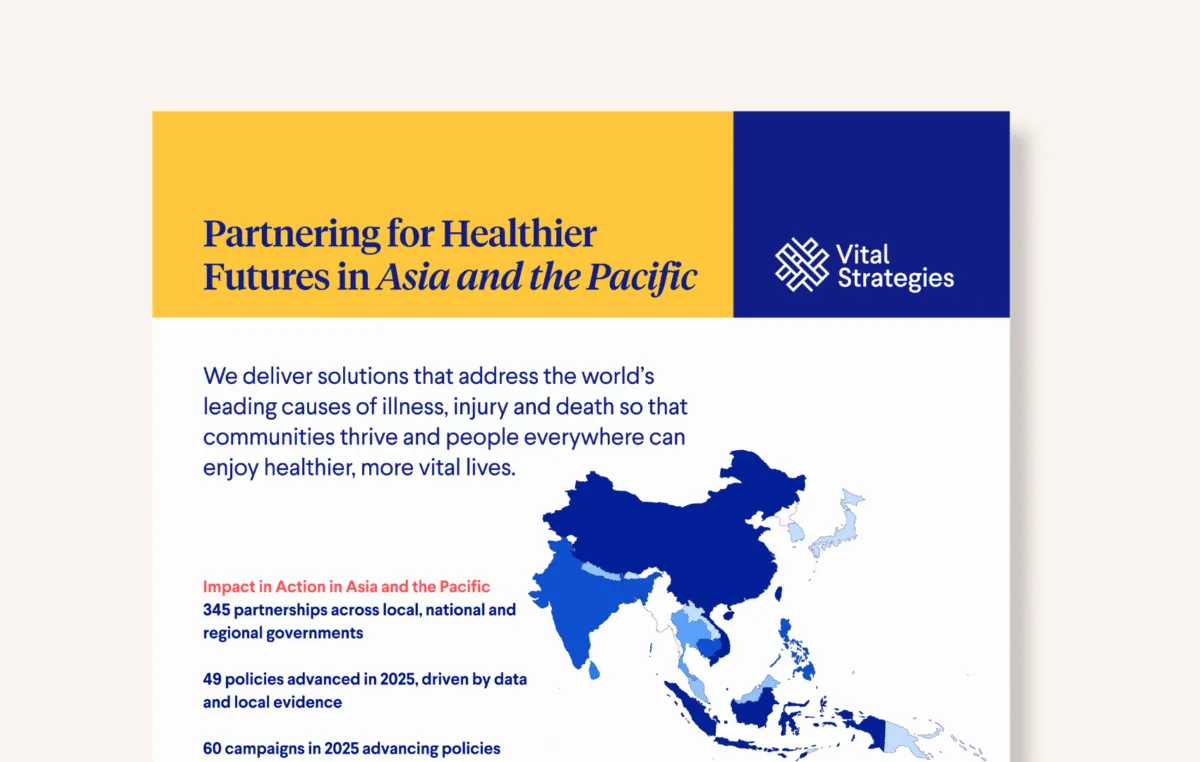
Our work in Asia and the Pacific
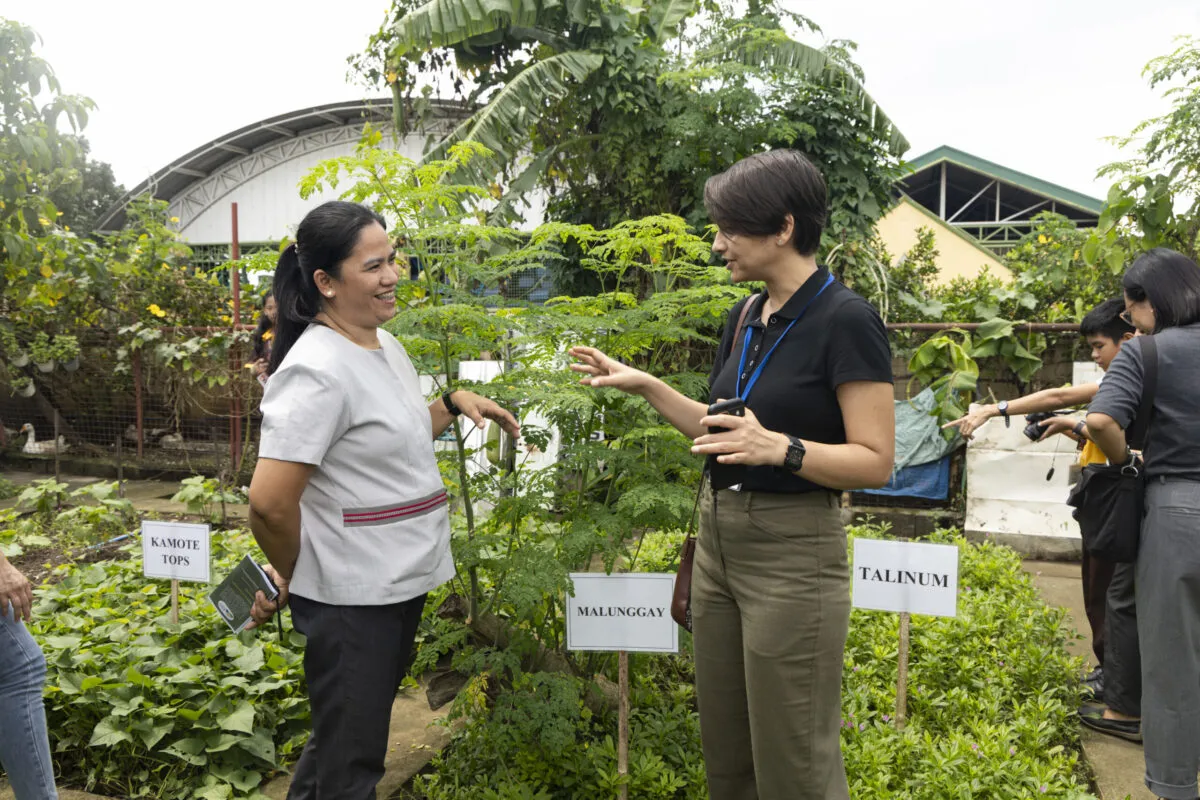

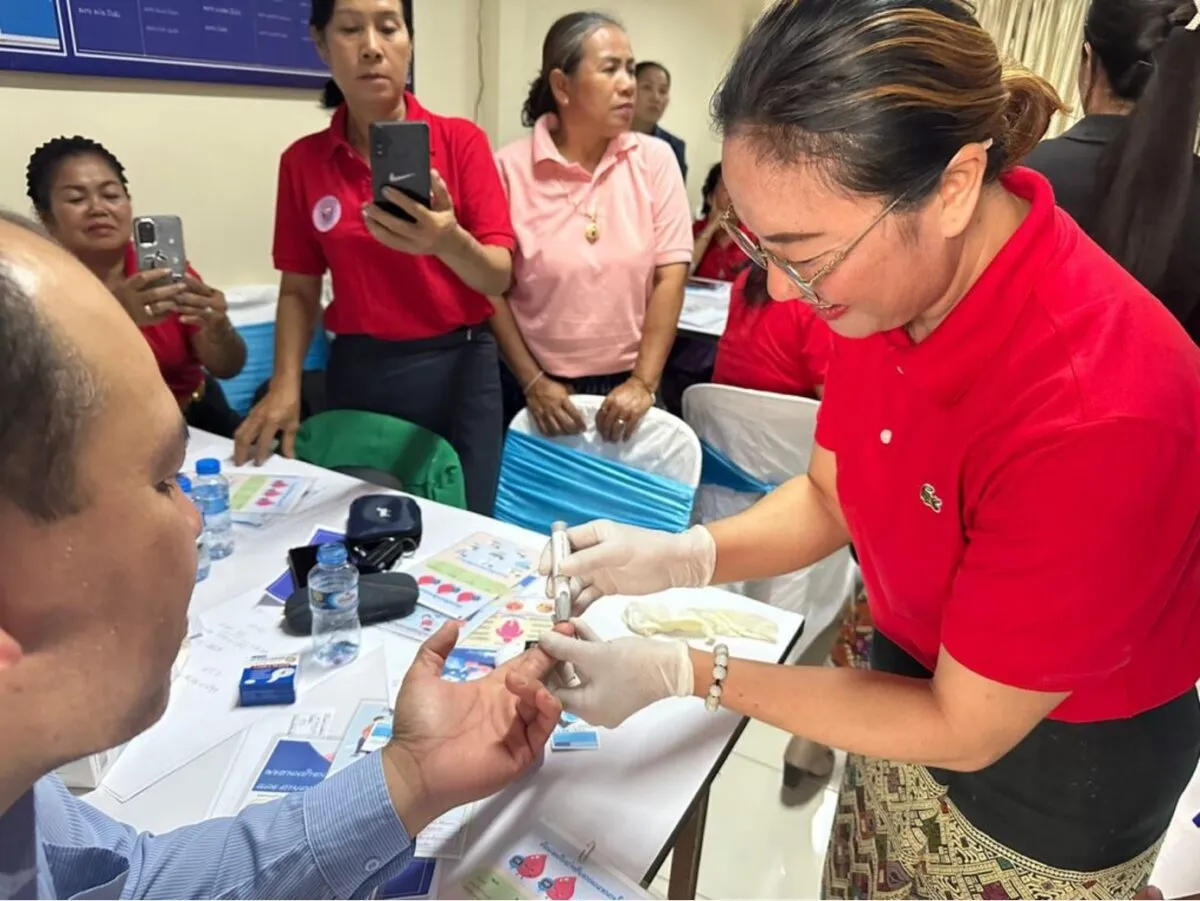


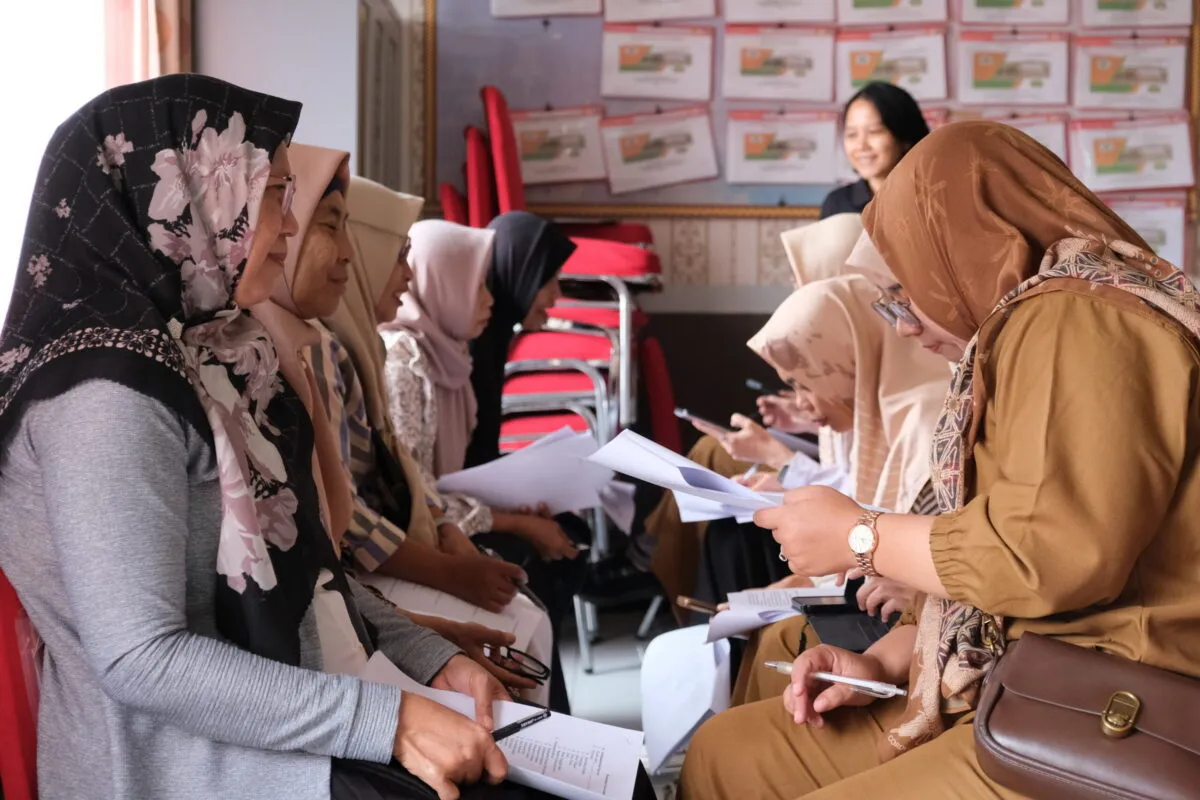
Vital Strategies was incorporated in Singapore in 2017 as a regional hub for the Asia Pacific region. A culturally, economically and politically diverse region of 47 countries and territories, the Asia Pacific region faces a variety of public health challenges as a result of emerging economies, population growth and environmental threats. The 4.3 billion people (or 60% of the global population) who call the region home are at risk — as tobacco use, air pollution, poor road safety and unhealthy diets contribute to millions of deaths each year.
Partnerships across local, national and regional governments
Policies advanced in 2025, driven by data and local evidence
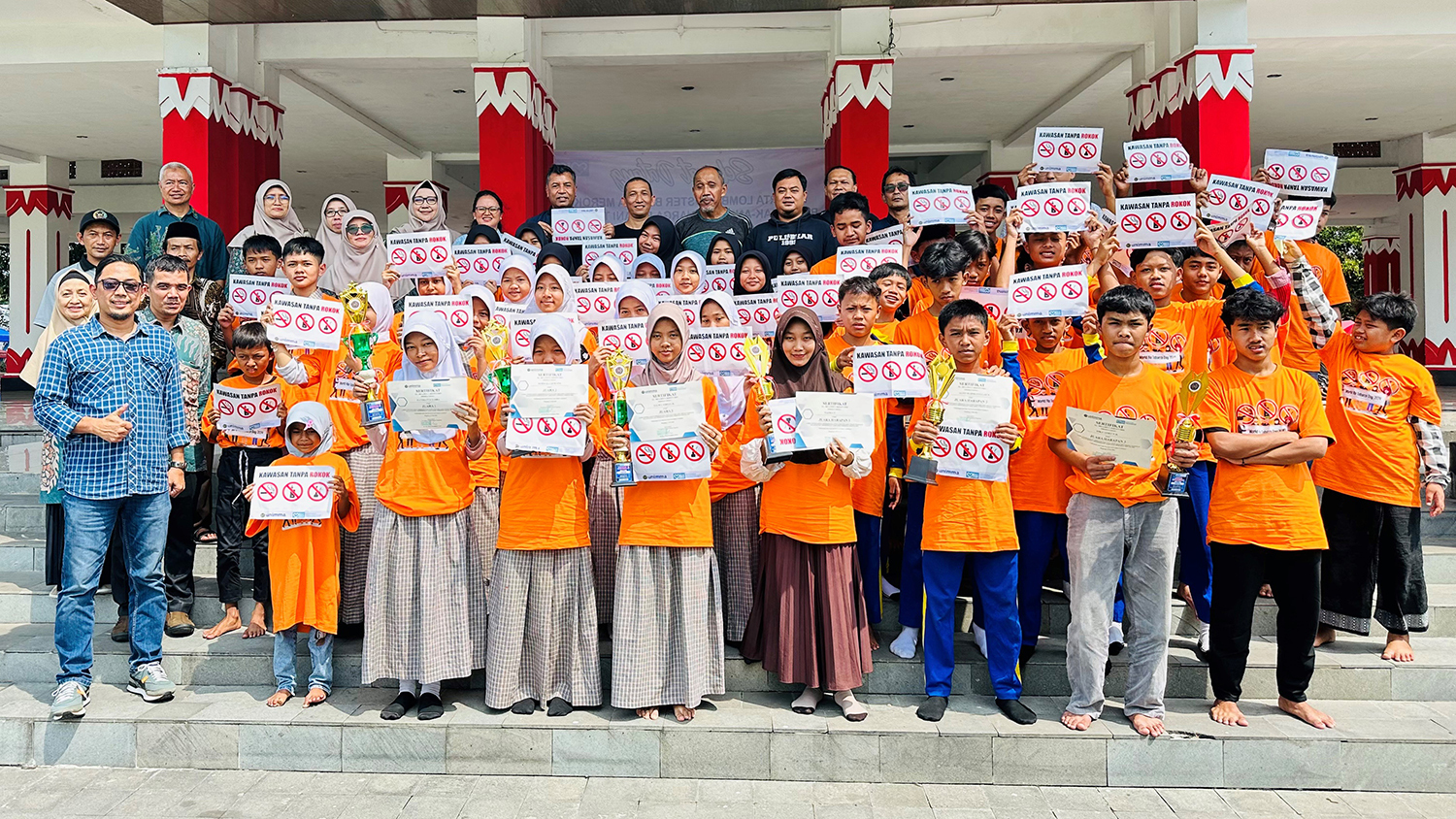
Campaigns in 2025 advancing policies on noncommunicable disease, the region’s largest killer
Examples of Vital’s Work
Sri Lanka
Can track and act on comprehensive cancer death data for the first time. Vital supported the 2025 national cancer mortality review, an important step toward integrating the cancer registry with the civil registration system to link cause-of-death data across ministries.
Learn more about the Cancer Registry Program8 Countries
Some 488 government staff trained to turn data into policy that saves lives. Vital’s Data to Policy Program trains health officials in root cause analysis and other methods, which are now institutionalized by the Philippines Department of Health.
Learn more about Data ImpactBangladesh and Viet Nam
Can now see for the first time what people are dying from and why. The countries’ first-ever national mortality reports give policymakers evidence to target the interventions that will save the most lives.
Learn more about CRVSIndonesia: Young Citizen Scientists Uncover the Air Pollution Risks They Face Every Day
In Jakarta, air pollution is a leading health risk, especially for children. To better understand exposure, Vital and local partners enlisted children to carry portable air pollution sensors for 24 hours while keeping a time-activity diary.
The data lets researchers link exposure levels to location, activity and pollution source and will inform efforts to integrate air pollution education into schools and strengthen surveillance systems.
Findings:
- ~4 in 5 children are exposed to fine particulates (PM2.5 ), exceeding the national standard.
- Children inhale dangerous levels of PM2.5 throughout the day.
- Home is where most exposure happens.
- Leading pollution sources that children identified: traffic, secondhand smoke, cooking, waste burning.
Building Public Health Intelligence
Better data leads to better decisions. We support governments to count every life, identify causes of death and use evidence to shape policies that improve health.

Partnering for Policy Solutions
Proven policies save lives. We work with governments to reduce consumption of harmful products, generate revenue and improve health at scale.
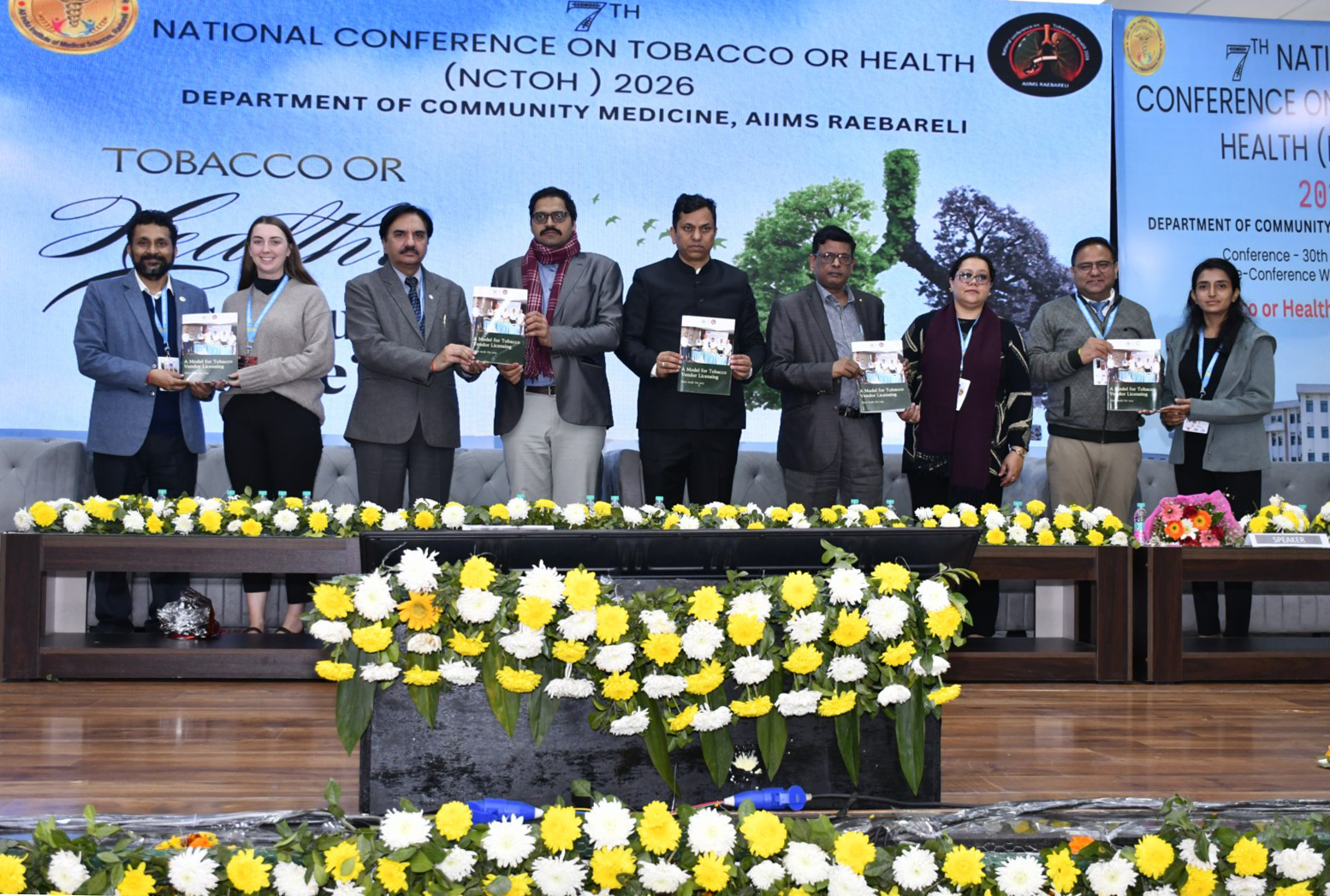
Policies That Reduce Harm—and Deliver Returns
Nepal
Is the first country with 100% health warning coverage on cigarette packs. Vital Strategies’ work with the Ministry of Health helped build the evidence base, secure endorsement and roll out this landmark policy.
Learn more about Tobacco ControlCambodia
A landmark law now gives 17 million people a legal identity—ensuring births and deaths are recorded so people can access health care, education and the full rights of citizenship. Vital Strategies worked alongside Cambodia’s government from 2017 to make the law a reality.
Learn more about Data ImpactSri Lanka
Passed a 34% alcohol tax increase that is already reducing consumption and protecting families—achieved with advocacy support from the Alcohol and Drug Information Centre, a partner of the Vital-led RESET Alcohol initiative.
Learn more about Alcohol PolicyAsian Cities Work to Reduce Heat-Related Illness and Death
Four cities—Bangkok, Seoul, Phnom Penh and Quezon City—are embarking on projects to measure the effects of urban heat islands on health and design policies to reduce these harms.
These efforts build on work conducted by other cities in the Vital-led Partnership for Healthy Cities, which supports 70+ cities around the world to address noncommunicable diseases and injuries.
What’s happening now:
- Seoul, South Korea is analyzing trends in heat-related illness and death and the effectiveness of current policies.
- Phnom Penh, Cambodia is strengthening the city’s resilience to extreme heat by developing and implementing a heat action plan—including an early warning and public alert system.

Communicating for Health
The right message changes minds and policy. We support campaigns that shift behavior, counter misinformation and build support for health over industry.
23 Countries
NCDs kill more people in Asia and the Pacific than any other cause—60 campaigns in 2025 built public and political momentum to pass taxes, regulations and policies on harmful commodities, protecting more than a billion people across the region.
Learn more about the Global Grants ProgramIndia
Hundreds of thousands of people permanently quit tobacco for less than US$3 each. Vital-supported campaigns proved that strategic communication is affordable at scale and gave governments across the region a replicable model to help millions quit.
Learn more about Data ImpactIndonesia
Is protecting children by strengthening and enforcing bans on harmful online tobacco marketing—driven by years of evidence gathered through Canary, Vital Strategies’ AI-powered tool that monitors and exposes how the industry targets young people online.
Learn more about CanaryCanary: An AI-Powered Media Monitoring Tool Reveals Harmful Marketing Online
Digital media enables corporations to market harmful products directly to consumers—including children—with less oversight than traditional media.
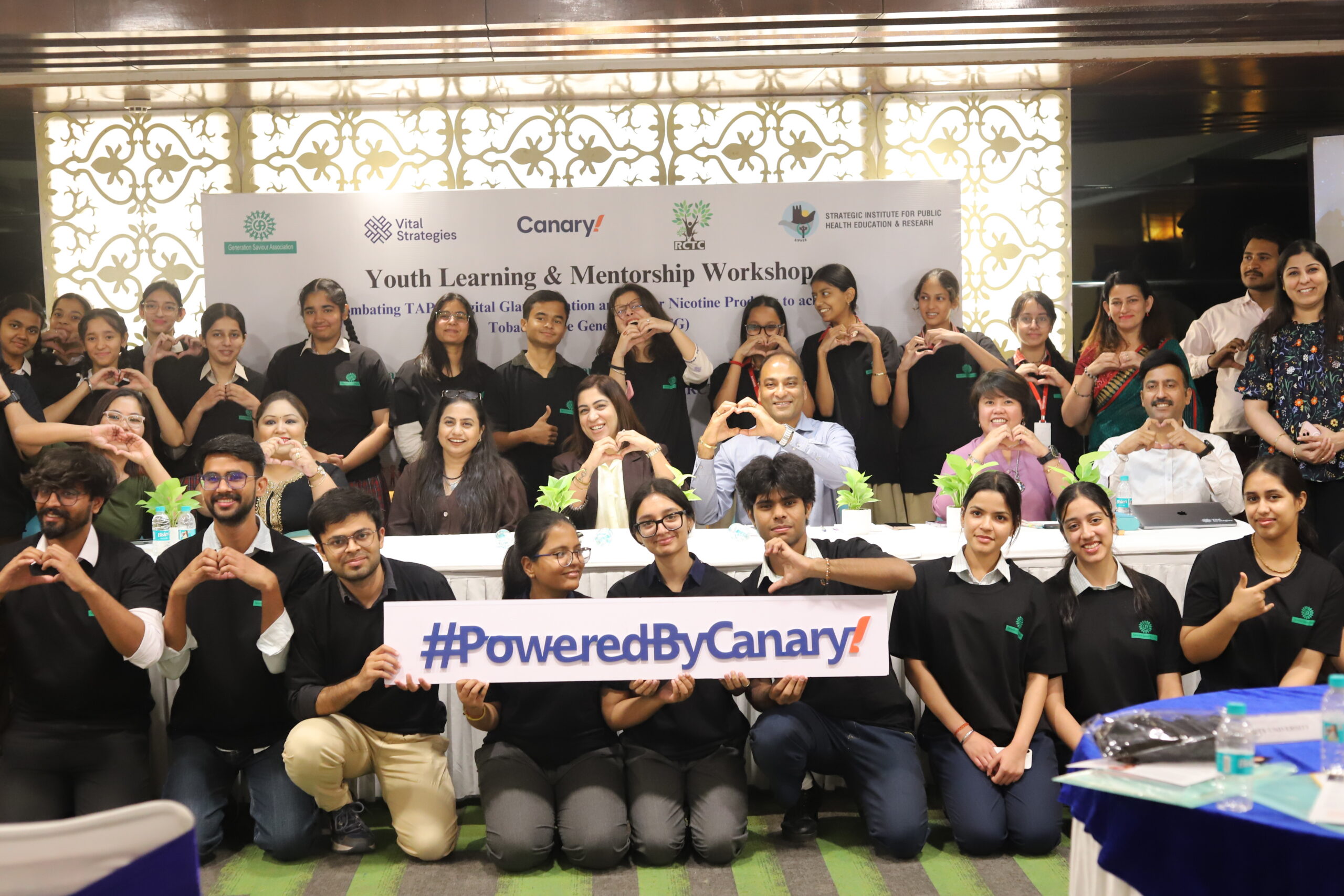
Canary by Vital Strategies is a monitoring and reporting service that tracks this marketing on social media and news sites in India, Indonesia, the Philippines and other markets, so policymakers can act.
Download our Asia and the Pacific Regional Brief
Download